

What is the standard for enclosure protection class? Which fields does it apply ?
Enclosure protection rating is a classification used to describe how well an equipment housing protects internal components against environmental and mechanical threats. These threats may include dust, water, rain, hose spray, splashing, corrosion, accidental contact, impact, vibration, oil, chemicals, and harsh outdoor conditions. The rating helps users understand whether a device enclosure is suitable for offices, factories, tunnels, transportation facilities, outdoor sites, hazardous areas, public spaces, or other demanding environments.
In technical and industrial product selection, enclosure protection rating is not just a label. It affects reliability, safety, installation method, maintenance frequency, and service life. A device with poor enclosure protection may fail when exposed to dust, moisture, washdown water, rain, salt mist, or mechanical impact. A properly rated enclosure helps protect electronics, terminals, speakers, microphones, displays, circuit boards, batteries, switches, and cable connections from harmful environmental conditions.
Common enclosure protection systems include IP ratings under IEC 60529, NEMA or UL Type ratings used widely in North America, IK impact ratings under IEC 62262, and additional product-specific protection requirements for hazardous areas, outdoor communication equipment, industrial control devices, and public safety terminals. For example, a Becke Telcom EX-BH621 explosion-proof telephone with an IP66 protection rating is designed for sites where communication equipment needs strong dust resistance and protection against powerful water jets, while also supporting fixed industrial and hazardous-area communication deployment.
What Is an Enclosure Protection Rating?
Definition and Core Meaning
An enclosure protection rating is a standardized or manufacturer-declared classification that describes the protective performance of an equipment enclosure. It explains what the enclosure is designed to resist and under what type of test or environmental condition. The enclosure may be made from metal, stainless steel, die-cast aluminum, engineering plastic, reinforced composite, or another material, but the rating focuses on the protection provided by the complete housing and its sealing design.
The core meaning is protection of the equipment and user. The enclosure protects internal components from harmful external conditions, and it may also protect people from accidental contact with hazardous parts inside the equipment. In an electrical or communication device, this can include protection against dust entering the circuitry, water reaching terminals, moisture damaging a microphone or speaker, or a user touching live parts.
Enclosure protection rating is especially important when equipment is installed outside controlled indoor environments. A product used in an office may only need basic protection. A product installed in a tunnel, refinery, mine, port, power plant, outdoor gate, washdown area, or public transport station may need much stronger protection.
Enclosure protection rating helps answer a practical question: can this device housing survive the environment where it will actually be installed?
Why Enclosure Protection Ratings Matter
Enclosure protection ratings matter because many equipment failures are caused by environmental exposure rather than by the main function of the device. Dust can block ventilation, contaminate contacts, or damage circuit boards. Water can cause corrosion, short circuits, insulation failure, microphone damage, speaker failure, display fogging, or unreliable buttons. Mechanical impact can crack housings, loosen terminals, or break mounting points.
A suitable protection rating helps reduce these risks. It gives designers, buyers, installers, and maintenance teams a clearer basis for product selection. Instead of relying on vague descriptions such as “weatherproof” or “rugged,” they can compare devices using recognized ratings and defined test methods.
Ratings also support documentation and project acceptance. In a public facility, industrial plant, transportation system, or hazardous site, the protection rating may be included in technical specifications, procurement documents, inspection reports, and maintenance standards.

Main Standards Used for Enclosure Protection
IEC 60529 and IP Code
IEC 60529 defines the IP Code, one of the most widely used systems for classifying degrees of protection provided by enclosures. An IP rating normally contains two digits. The first digit describes protection against access to hazardous parts and ingress of solid foreign objects such as dust. The second digit describes protection against water ingress.
For example, in IP66, the first “6” means the enclosure is dust-tight under the relevant test conditions, while the second “6” means protection against powerful water jets. This does not mean the product is designed for continuous underwater operation. It means the enclosure has passed the specified dust and water-jet protection requirements for that rating.
IP ratings are common in industrial telephones, outdoor speakers, cameras, access control devices, control boxes, electrical cabinets, sensors, lighting equipment, and field terminals. They are useful because they provide a structured way to compare dust and water protection.
NEMA and UL Type Ratings
NEMA and UL Type ratings are commonly used in North America for electrical enclosures. These ratings describe enclosure suitability for different environmental conditions such as indoor use, outdoor use, falling dirt, rain, sleet, windblown dust, hose-directed water, oil, coolant, corrosion, and sometimes temporary submersion depending on the type.
NEMA and IP ratings should not be treated as exact equivalents. IP ratings mainly describe protection against solids and liquids. NEMA and UL Type ratings may include broader environmental factors such as corrosion, icing, oil, coolant, and construction requirements. A rough comparison may help with early selection, but final product approval should follow the standard, market, project, and certification requirements that apply to the installation.
For international projects, engineers often need to consider both systems. A device may need an IP rating for global specifications and a NEMA or UL Type rating for North American acceptance.
IEC 62262 and IK Impact Rating
IEC 62262 defines the IK Code for classifying the degree of protection provided by enclosures against external mechanical impacts. While IP ratings focus on dust and water ingress, IK ratings focus on impact resistance. This matters in public areas, industrial sites, transportation systems, schools, parking facilities, and outdoor installations where equipment may be hit, bumped, or vandalized.
IK ratings are often considered together with IP ratings. A wall-mounted intercom may need good water protection and also strong impact resistance. A tunnel phone may need protection against dust, water spray, vibration, and accidental impact. A public help point may need both environmental sealing and vandal-resistant construction.
IP and IK ratings are different protection concepts. A high IP rating does not automatically mean high impact resistance, and a high IK rating does not automatically mean strong water protection.
How IP Ratings Work
First Digit: Protection Against Solids and Dust
The first digit in an IP rating describes protection against access to hazardous parts and ingress of solid foreign objects. Lower numbers indicate protection against larger objects such as hands, fingers, tools, or wires. Higher numbers indicate stronger dust protection.
A first digit of 5 means dust-protected. Dust ingress is not completely prevented, but it must not enter in a quantity that interferes with safe operation. A first digit of 6 means dust-tight. This is the highest common solid-particle protection level in the IP system.
Dust-tight protection is valuable in factories, mines, cement plants, tunnels, ports, outdoor yards, construction areas, and industrial sites where fine particles may enter equipment over time. For communication terminals, dust protection can help preserve button function, microphone quality, speaker reliability, circuit stability, and connector performance.
Second Digit: Protection Against Water
The second digit in an IP rating describes protection against water ingress. Lower numbers cover dripping or spraying water, while higher numbers cover stronger water exposure such as water jets, powerful water jets, temporary immersion, or continuous immersion under specified conditions.
A second digit of 5 generally indicates protection against water jets. A second digit of 6 indicates protection against powerful water jets. Ratings such as IP67 and IP68 address immersion conditions, but they should not be assumed to include all water-jet tests unless the product has been tested and marked accordingly.
This distinction is important. IP66 is strong for rain, hose spray, and powerful water-jet exposure, but it is not the same as an immersion rating. Equipment used in flood-prone areas, submerged pits, or underwater applications may require different protection.
What IP66 Means in Practice
IP66 is a common and important enclosure protection rating for harsh industrial and outdoor environments. The first digit, 6, indicates dust-tight protection. The second digit, 6, indicates protection against powerful water jets. Together, IP66 means the enclosure is designed to resist dust ingress and strong water-jet exposure under defined test conditions.
In practical terms, IP66 is useful for equipment installed in dusty, wet, outdoor, washdown, or exposed areas where rain, splashing, hose cleaning, and airborne particles may be present. It is often selected for industrial phones, outdoor intercoms, control stations, junction boxes, field instruments, cameras, sensors, lighting, and public safety terminals.
However, IP66 does not mean unlimited protection. It does not automatically mean corrosion resistance, explosion protection, UV resistance, chemical resistance, impact resistance, cable-gland suitability, or immersion capability. Those requirements must be evaluated separately.
IP66 is a strong dust-and-water protection rating, but it should be read as one part of the complete enclosure performance, not as a universal ruggedness guarantee.

Protection Ratings Beyond IP
Impact Resistance and IK Rating
Impact resistance is important when equipment may be struck by tools, vehicles, materials, users, or vandalism. IK rating helps describe how much mechanical impact an enclosure can resist under defined test conditions. A device in a public corridor, tunnel walkway, factory passage, parking area, or school campus may need impact resistance in addition to water and dust sealing.
Impact resistance depends on housing material, wall thickness, mechanical structure, mounting method, lens design, keypad construction, handset design, and internal support. Metal housings, die-cast aluminum enclosures, stainless steel panels, reinforced plastics, and protective guards may all be used to improve mechanical durability.
In many industrial communication projects, engineers should evaluate IP and IK together. Environmental sealing keeps dust and water out, while impact protection helps keep the equipment physically intact.
Corrosion Resistance
Corrosion resistance is not fully described by a basic IP rating. An enclosure may resist water ingress but still corrode in salt spray, chemical vapor, acid gas, fertilizer dust, marine air, or industrial pollution. This is why material selection matters.
Stainless steel, coated aluminum, engineering plastics, surface-treated metals, corrosion-resistant fasteners, sealed cable entries, and suitable gaskets may be used depending on the environment. Outdoor coastal sites, chemical plants, offshore platforms, tunnels, and wastewater facilities often require special attention to corrosion.
When corrosion is a major risk, the enclosure rating should be considered together with material, coating, fastener selection, cable gland material, and maintenance plan.
Explosion Protection and Hazardous Areas
Explosion protection is different from general enclosure protection. A product may have a high IP rating but still not be suitable for explosive atmospheres. Hazardous-area equipment requires appropriate explosion protection design, certification, marking, installation practice, and maintenance according to the applicable standards and area classification.
Explosion-proof or flameproof equipment may need to prevent ignition of surrounding flammable gas, vapor, or dust. Increased safety equipment may reduce ignition risk through enhanced construction. Intrinsically safe circuits may limit electrical energy. These protection concepts are not the same as IP66.
For hazardous industrial sites, both aspects may be required. The equipment may need certified explosion protection and a suitable environmental enclosure rating such as IP66. The two ratings support different safety and reliability objectives.
Becke Telcom EX-BH621 and IP66 Protection
Why IP66 Matters for Explosion-Proof Telephones
Explosion-proof telephones are often installed in harsh areas where ordinary communication equipment is not suitable. These locations may include petrochemical plants, oil and gas facilities, chemical processing zones, heavy industry areas, mines, utility corridors, power sites, and outdoor industrial platforms. In such places, the enclosure must protect the internal communication components from dust, moisture, rain, and water spray while supporting stable voice communication.
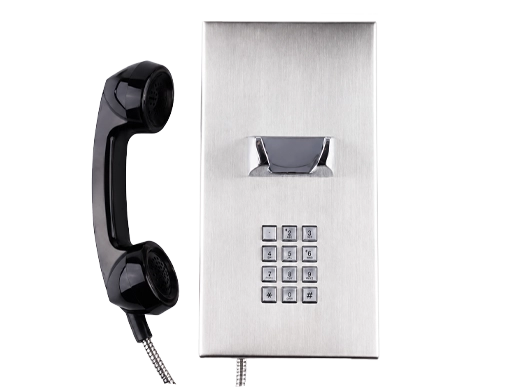
The Becke Telcom EX-BH621 explosion-proof telephone with IP66 protection rating is a typical example of why enclosure protection matters in industrial communication. Its IP66 rating indicates dust-tight protection and resistance to powerful water jets, making it suitable for environments where dust and water exposure may affect long-term reliability.
For users, the value is practical. A field telephone may need to remain available during rain, cleaning, dust exposure, and daily industrial operation. If the enclosure allows moisture or dust to enter, the handset, keypad, speaker, microphone, terminals, and internal electronics may become unreliable. IP66 helps reduce that risk when the product is installed and maintained correctly.
Role in Hazardous and Industrial Communication Sites
In industrial communication systems, a wall-mounted or fixed-position explosion-proof telephone may serve as an emergency call point, process-area communication terminal, dispatch contact station, maintenance coordination phone, or field communication endpoint. The enclosure protection rating supports these functions by helping the device survive the actual site environment.
The EX-BH621 can be positioned as part of a broader hazardous-area communication layout where equipment selection must consider explosion protection, enclosure sealing, mounting method, cable entry, grounding, voice audibility, signage, and maintenance access. IP66 is especially relevant where the telephone may face dust, rain, spray, or washdown conditions.
The correct application should still be verified against the product datasheet, certification marking, site hazardous-area classification, wiring method, ambient temperature, and installation requirements. IP66 is important, but it is only one part of safe and reliable hazardous-area product selection.
Selection Value for Project Specifications
When project engineers specify an explosion-proof telephone, the enclosure rating is often included in the technical requirements. A specification may require a rugged housing, outdoor suitability, cable sealing, corrosion resistance, and a protection level such as IP66. This helps ensure that the selected telephone is not only functionally suitable but also physically protected for the site.
For Becke Telcom EX-BH621, the IP66 rating can support procurement and project documentation by showing that the telephone housing is intended for demanding dust-and-water conditions. In industrial projects, this can be valuable for tunnels, refineries, chemical plants, power facilities, marine terminals, and other locations where reliable communication depends on enclosure durability.
The best project result comes from matching IP66 protection with the correct hazardous-area certification, installation accessories, mounting location, cable glands, and maintenance process.

Applications of Enclosure Protection Ratings
Industrial Manufacturing and Process Plants
Manufacturing and process plants use enclosure protection ratings for control panels, industrial telephones, sensors, motors, junction boxes, drives, cameras, switches, and field instruments. These environments may include dust, oil mist, vibration, cleaning water, metal particles, heat, humidity, and chemical exposure.
Selecting the right protection rating helps prevent unplanned equipment failure. For example, a device installed near a washdown line may require stronger water-jet protection than one installed in a dry control room. A device installed near powder handling may require high dust protection. A device installed outdoors may need both water resistance and UV or corrosion resistance.
Enclosure protection ratings help engineers divide the facility into zones of environmental risk and select equipment accordingly.
Transportation, Tunnels, and Public Infrastructure
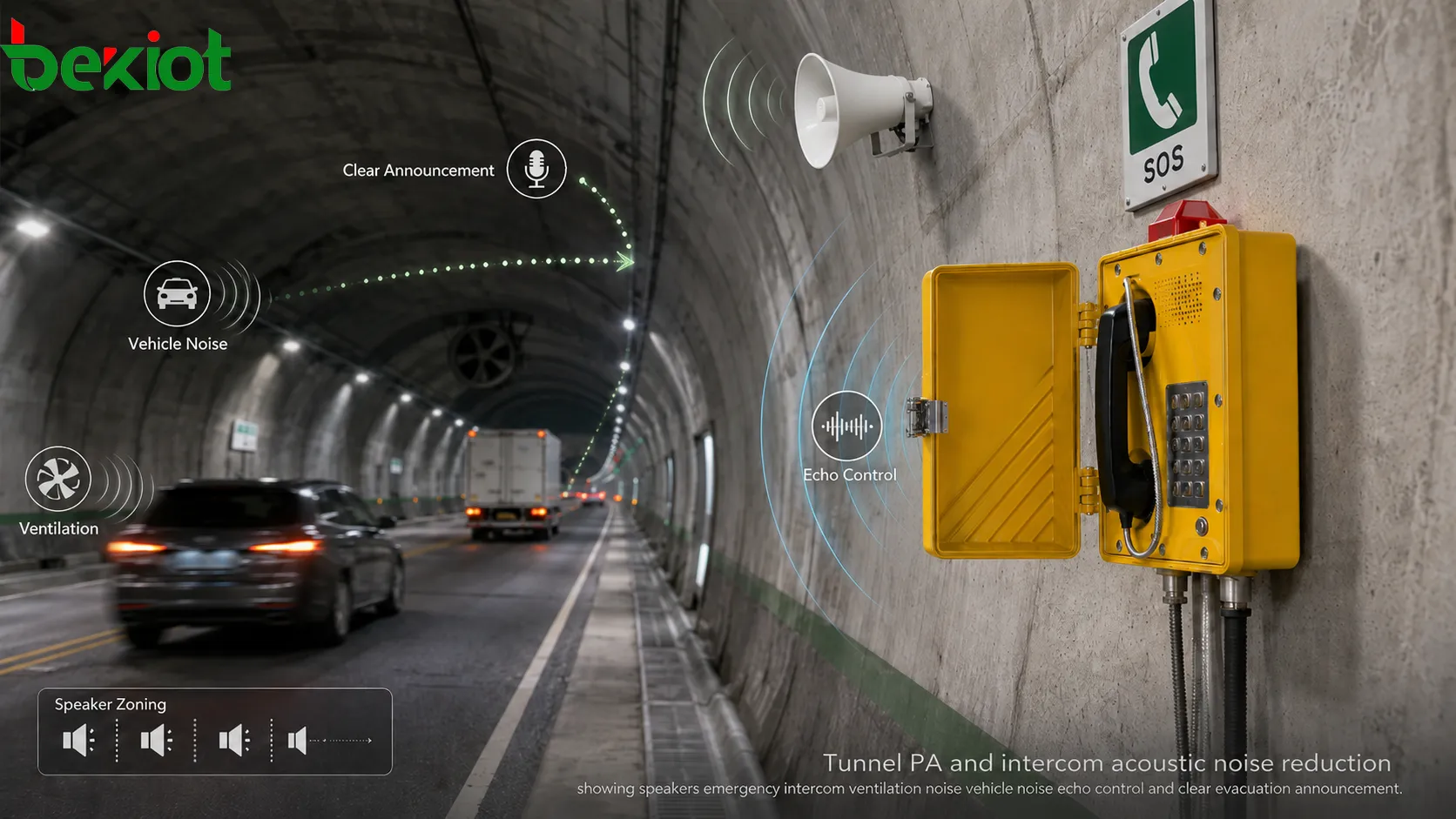
Transportation systems, tunnels, metro stations, railways, highways, ports, and airports often install communication devices, cameras, speakers, emergency phones, signal boxes, and control equipment in exposed locations. These devices may face dust, rain, vibration, cleaning, exhaust, temperature changes, and public contact.
Enclosure ratings help ensure that equipment remains reliable in these conditions. A tunnel emergency phone may need dust protection, water spray resistance, impact resistance, and clear access for maintenance. A platform intercom may need protection against cleaning water and public use. A port communication device may need corrosion-resistant construction.
In public infrastructure, enclosure protection contributes to both service continuity and user safety.
Outdoor Security and Communication Systems
Outdoor security and communication systems depend heavily on enclosure protection. Cameras, intercoms, help points, access control terminals, sirens, speakers, network boxes, and wireless devices may be installed on walls, poles, gates, fences, and open yards.
These devices may be exposed to rain, windblown dust, sunlight, water spray, insects, condensation, vandalism, and temperature variation. A strong IP rating helps protect against dust and water, while IK rating, material choice, and mounting design help address impact and durability.
For outdoor projects, enclosure protection should be considered at the design stage, not after device failure begins.
Hazardous Areas and Emergency Communication
Hazardous areas and emergency communication systems require special attention because equipment failure can affect safety response. Explosion-proof telephones, alarm stations, paging devices, local control stations, and emergency call terminals may be exposed to both harsh environmental conditions and safety-critical operating requirements.
In these locations, enclosure protection rating supports environmental reliability, while explosion protection certification supports ignition safety. Products such as the Becke Telcom EX-BH621 explosion-proof telephone with IP66 protection rating show how both rugged enclosure design and hazardous-area communication requirements can be considered in one product selection process.
Emergency communication equipment should remain reachable, visible, sealed, properly mounted, and regularly tested so that it performs when needed.
How to Select the Right Enclosure Protection Rating
Identify the Installation Environment
Selection begins with the actual installation environment. Is the device installed indoors or outdoors? Is there dust, rain, hose spray, washdown, salt air, chemical vapor, vibration, impact, or risk of immersion? Is the device installed in a hazardous area? Is the equipment touched frequently by users? Is it exposed to public vandalism or vehicle movement?
These questions help define the required protection. A device in a clean office may not need IP66. A device in a wet tunnel, dusty workshop, outdoor platform, or industrial washdown area may need a much stronger enclosure rating.
The rating should match the worst credible exposure, not only the average condition.
Read the Rating Correctly
Ratings must be read carefully. IP65, IP66, IP67, and IP68 are not simply better versions of one another in every situation. IP66 focuses on powerful water jets. IP67 focuses on temporary immersion. A product rated IP67 may not automatically be rated IP66 unless it has also passed the water-jet test.
Similarly, a NEMA or UL Type rating should not be replaced by an IP rating without checking the project requirements. NEMA and UL Type ratings may include environmental factors not covered by the IP Code. IK impact ratings are separate from IP ratings and should be checked when impact risk is relevant.
Correct interpretation prevents overconfidence and helps avoid unsuitable substitutions.
Check the Complete Installation Path
The protection rating applies to the complete enclosure as tested or certified. It can be weakened by poor installation. Incorrect cable glands, missing seals, loose covers, damaged gaskets, unsealed holes, wrong conduit entries, poor mounting, or field modifications can reduce the actual protection level.
For IP66 equipment, cable entries and accessories should also support the required sealing performance. If the enclosure is drilled or modified without proper sealing, the original rating may no longer apply. This is especially important for outdoor, industrial, and hazardous-area products.
The correct product must be matched with correct installation practice.
Enclosure protection is a system result: housing, gasket, cable entry, mounting, accessories, installation, and maintenance all affect the final performance.
Maintenance and Inspection Tips
Inspect Gaskets, Covers, and Cable Entries
Enclosure protection depends on sealing parts that can age or become damaged. Gaskets may harden, crack, compress, or shift. Covers may become loose. Cable glands may loosen due to vibration. Blanking plugs may be removed and not replaced correctly. These problems can allow dust or water to enter.
Regular inspection should check the enclosure door or cover, gasket condition, screw tightness, cable entries, conduit joints, drain or breather elements, and signs of corrosion or water marks. If the device is installed outdoors or in a washdown area, inspection should be more frequent.
Preventive inspection helps maintain the protection rating in real operation rather than only at the time of purchase.
Clean Without Damaging the Enclosure
Cleaning methods should match the rating and manufacturer instructions. A device rated IP66 may resist powerful water jets, but it should still be cleaned in a way that does not damage gaskets, microphones, speakers, labels, cable glands, or surface coatings. Chemical cleaners may also affect seals and materials.
In industrial sites, cleaning crews should understand which equipment can be sprayed, which should be wiped, and which requires special procedures. Stronger cleaning does not always mean safer cleaning.
Good cleaning practice protects both hygiene and enclosure integrity.
Replace Damaged Parts Promptly
Cracked housings, broken covers, missing screws, damaged glands, torn gaskets, corroded fasteners, and loose mounting brackets should be repaired promptly. A small enclosure defect may allow water or dust ingress that later causes electrical failure.
For critical equipment such as emergency phones, explosion-proof telephones, alarm terminals, and outdoor communication devices, damaged enclosure parts should not be ignored. The device may still appear functional while its protection has already been compromised.
Maintenance teams should treat enclosure condition as part of equipment reliability, not only as appearance.
Common Misunderstandings About Enclosure Ratings
“Waterproof” Is Not a Precise Technical Rating
The word “waterproof” is often used in marketing, but it is not precise enough for technical selection. Different environments involve different water exposure: dripping, splashing, rain, hose spray, powerful jets, temporary immersion, continuous immersion, or high-pressure hot water. These are not the same.
A defined rating such as IP66 provides clearer information than a general waterproof claim. It tells the user which type of test condition the enclosure is designed to resist. For engineering, procurement, and project acceptance, the rating is more useful than vague language.
Users should always ask what standard and test condition support the protection claim.
High IP Rating Does Not Mean Explosion-Proof
A high IP rating does not mean a product is explosion-proof. IP ratings describe protection against solids and liquids. Explosion protection addresses ignition risk in hazardous atmospheres. These are separate topics and require different standards, design methods, and certification markings.
For example, an IP66 industrial device may be well protected against dust and water, but it is not automatically suitable for flammable gas or dust atmospheres. Hazardous-area suitability must be checked through explosion protection marking and certification.
In hazardous areas, both enclosure protection and explosion protection may be required, but one does not replace the other.
Ratings Can Be Lost Through Poor Installation
Another common misunderstanding is assuming that the rating remains valid regardless of installation. In reality, the enclosure rating can be compromised if the product is installed incorrectly. A missing gasket, wrong cable gland, loose cover, unsealed conduit, or unauthorized hole can reduce protection.
This is why rated accessories and correct workmanship matter. The complete installation should maintain the same level of protection intended by the product design.
A certified or rated enclosure should be handled as a controlled system, not as a box that can be modified freely.
Conclusion
Enclosure protection rating describes how well an equipment housing protects internal components and users from environmental and mechanical threats. It is essential for selecting reliable devices in industrial, outdoor, hazardous, transportation, public facility, and emergency communication environments.
Important rating systems include IP Code under IEC 60529 for dust and water protection, NEMA and UL Type ratings for broader enclosure environmental suitability in North America, and IK Code under IEC 62262 for mechanical impact protection. These systems are related to enclosure performance but should not be treated as identical or interchangeable.
IP66 is a widely used rating for harsh environments because it indicates dust-tight protection and resistance to powerful water jets. In the case of Becke Telcom EX-BH621 explosion-proof telephone, the IP66 protection rating supports reliable field communication in dusty, wet, and demanding industrial conditions. For best results, users should match the enclosure rating with the actual environment, hazardous-area requirements, installation accessories, cable sealing, mounting method, and maintenance plan.
FAQ
What is an enclosure protection rating?
An enclosure protection rating describes how well an equipment housing protects internal parts against environmental or mechanical threats such as dust, water, impact, corrosion, and accidental contact.
It helps users select equipment that can survive the actual installation environment.
What does IP66 mean?
IP66 means the enclosure is dust-tight and protected against powerful water jets under defined test conditions. It is commonly used for outdoor and industrial equipment exposed to dust, rain, spray, or hose cleaning.
IP66 does not automatically mean immersion protection, explosion protection, corrosion resistance, or impact resistance.
Is IP rating the same as explosion protection?
No. IP rating describes protection against solids and liquids. Explosion protection describes whether equipment is designed and certified to reduce ignition risk in hazardous atmospheres.
Hazardous-area equipment may need both explosion protection certification and a suitable enclosure rating such as IP66.
Why is IP66 useful for the Becke Telcom EX-BH621 explosion-proof telephone?
IP66 is useful because the EX-BH621 may be installed in harsh industrial areas where dust, rain, water spray, or cleaning water can affect communication equipment. Dust-tight and powerful water-jet protection helps protect internal components and support long-term reliability.
The final selection should still verify the product datasheet, hazardous-area certification, installation method, cable entry, and site environment.