

Vollduplex ist eine Betriebsart der Kommunikation, bei der beide Seiten einer Verbindung gleichzeitig Audio senden und empfangen können. Praktisch bedeutet das: Zwei Personen können natürlich miteinander sprechen, ohne darauf warten zu müssen, dass der andere aufhört. Anders als bei Halbduplex-Systemen, bei denen die Teilnehmer sich abwechseln müssen, ermöglicht Vollduplex ein durchgehendes Gespräch, das der direkten Face-to-Face-Kommunikation nahekommt.
Diese Fähigkeit ist in modernen Sprachnetzen äußerst wichtig, denn heute erwartet man von Kommunikation, dass sie unmittelbar, natürlich und effizient ist. In VoIP-Systemen, SIP-Gegensprechanlagen, Leitstellenkonsolen, industrieller Telefonie und Umgebungen mit einheitlicher Kommunikation (Unified Communications) müssen Nutzer häufig unterbrechen, bestätigen, koordinieren und in Echtzeit reagieren. Vollduplex unterstützt dieses Verhalten, indem es den Stop-and-Start-Rhythmus beseitigt, der einfachere Kommunikationsmethoden einschränkt.
Auch wenn die Idee einfach klingt, beruht Vollduplex auf sorgfältiger Audiotechnik. Das System muss gleichzeitige Sprachpfade verwalten, Echos kontrollieren, Hintergrundgeräusche reduzieren, eine niedrige Latenz aufrechterhalten und die Sprachverständlichkeit bewahren – selbst wenn beide Parteien gleichzeitig sprechen. Aus diesem Grund ist Vollduplex nicht nur eine Sprechfunktion, sondern eine technische Grundlage für professionelle Sprachkommunikation.

Vollduplex ermöglicht es beiden Gesprächspartnern, gleichzeitig in Echtzeit zu sprechen und zu hören.
Was Vollduplex in der Sprachkommunikation bedeutet
Gleichzeitige bidirektionale Audioübertragung
Das Kernstück von Vollduplex ist die Fähigkeit, Audio gleichzeitig in beide Richtungen zu übertragen. Jede Gesprächsseite verfügt über einen aktiven Sendepfad und einen aktiven Empfangspfad, die zusammenarbeiten – nicht nacheinander. Dies erzeugt einen natürlichen Gesprächsfluss, da die Benutzer nicht auf eine Kanalumschaltung oder das Loslassen einer Push-to-Talk-Taste warten müssen, bevor sie antworten.
In realen Kommunikationsszenarien ist das wichtiger, als es scheint. Menschliche Gespräche leben vom Timing, kurzen Bestätigungen, Unterbrechungen und sich überlappender Rede. Menschen sagen ganz natürlich Dinge wie „ja“, „bitte weiter“ oder „warte“, während der andere noch spricht. Ein Vollduplex-System unterstützt dieses Verhalten und macht Kommunikation schneller und intuitiver – besonders wenn Entscheidungen schnell getroffen werden müssen.
Aus diesem Grund wird Vollduplex in der Telefonie, bei Gegensprechanlagen, Konferenzsystemen, Einsatzzentralen und kollaborativen Arbeitsumgebungen bevorzugt. Es bietet ein Sprecherlebnis, das der natürlichen menschlichen Interaktion entspricht, anstatt die Kommunikation in ein starres Austauschmuster zu zwingen.
Unterschied zum Halbduplex
Vollduplex lässt sich am besten verstehen, wenn man es mit Halbduplex vergleicht. In einem Halbduplex-System kann die Kommunikation in beide Richtungen erfolgen, aber nicht gleichzeitig. Eine Seite spricht, dann antwortet die andere, nachdem der Kanal freigegeben wurde. Das klassische Walkie-Talkie-Verhalten ist das bekannteste Beispiel. Diese Methode ist in manchen Funkumgebungen nützlich, aber sie verändert die Art der Kommunikation und kann Interaktionen verlangsamen.
Im Gegensatz dazu beseitigt Vollduplex die Notwendigkeit von Sprechwechseln. Das Ergebnis ist eine natürlichere Diskussion, weniger verpasste Hinweise und eine bessere Gesprächseffizienz. Im Kundendienst, bei der Notfallkoordinierung, in Industriebetrieben und der Bürotelefonie kann dieser Unterschied das Verständnis und die Geschwindigkeit stark beeinflussen. Ein Nutzer kann sofort nachfragen, unterbrechen, um einen Fehler zu verhindern, oder Details bestätigen, ohne auf seine Sprechmöglichkeit zu warten.
Deshalb wird Vollduplex oft mit höherer Kommunikationsqualität assoziiert. Es klingt nicht einfach besser wegen der Codec-Leistung oder Lautsprecherkonstruktion. Es klingt besser, weil das Kommunikationsmodell selbst besser dazu passt, wie Menschen tatsächlich sprechen.
Vollduplex verbessert die Kommunikation nicht nur, indem es Schall in beide Richtungen passieren lässt, sondern indem es menschliche Gespräche normal ablaufen lässt.
Wie Vollduplex funktioniert
Getrennte Sende- und Empfangspfade
Ein Vollduplex-Audiosystem arbeitet, indem es gleichzeitige Sende- und Empfangskanäle aufrechterhält. In digitalen Systemen wird dies über Netzwerkpaketströme, DSP-Verarbeitung, Codec-Management und Audio-Steuerung der Endgeräte abgewickelt. In praktischen Einsätzen erfasst das Endgerät die lokale Sprache über ein Mikrofon und gibt gleichzeitig die ankommende Sprache über einen Lautsprecher oder Hörer wieder, ohne einen Pfad gegen den anderen zu sperren.
In SIP- und VoIP-Umgebungen arbeitet Vollduplex typischerweise über paketbasierte Sprachsitzungen, bei denen beide Medienströme während des gesamten Anrufs aktiv bleiben. Das Endgerät, die Medien-Engine und das Netzwerk tragen alle zur Leistung bei. Der Mikrofonpfad muss brauchbare Sprache erfassen, der Lautsprecherpfad muss eingehendes Audio klar wiedergeben, und das Gerät muss verhindern, dass seine eigene Lautsprecherausgabe störend in das Mikrofon zurückgelangt.
Aus diesem Grund hängt die Vollduplex-Leistung von mehr ab als nur der Anrufsignalisierung. Ein SIP-Gerät kann einen Anruf erfolgreich aufbauen, aber um eine gute Vollduplex-Audioqualität zu erreichen, sind ein durchdachtes Akustikdesign, die richtige Verstärkungsregelung, Echounterdrückung und ein stabiler Netzwerktransport erforderlich.
Echounterdrückung und Audioverarbeitung
Eine der wichtigsten technischen Herausforderungen bei der Vollduplex-Kommunikation ist das Echo. Wenn ein Gerät eingehende Sprache über einen Lautsprecher wiedergibt, kann dieser Schall vom Mikrofon wieder aufgenommen und in den Anruf zurückgesendet werden. Wenn dies nicht kontrolliert wird, hören die Benutzer möglicherweise verzögerte Reflexionen ihrer eigenen Stimme, was das Gespräch unangenehm oder unbrauchbar machen kann.
Zur Lösung verwenden Vollduplex-Geräte häufig akustische Echokompensation, digitale Signalverarbeitung, automatische Verstärkungsregelung und Rauschunterdrückungsalgorithmen. Die Echokompensation versucht, das eigene Wiedergabesignal des Geräts aus dem ausgehenden Mikrofonpfad zu identifizieren und zu entfernen. Die Rauschunterdrückung reduziert Umgebungsgeräusche, während die Verstärkungsregelung die Pegel ausbalanciert, sodass keine Seite die andere übertönt.
Diese Mechanismen sind besonders wichtig bei Freisprech-Gegensprechanlagen, industriellen SIP-Endgeräten, Leitstellenmikrofonen und raumbasierten Kommunikationsgeräten. In solchen Produkten ist Vollduplex nur dann effektiv, wenn die gleichzeitige Sprache unter realen akustischen Bedingungen klar und stabil bleibt.
Netzwerkleistung und geringe Latenz
Ein Vollduplex-Gespräch hängt auch davon ab, dass die Latenz gering genug für eine natürliche Interaktion bleibt. Wenn die Netzwerkverzögerung zu hoch wird, können Benutzer anfangen, sich unbeabsichtigt zu unterbrechen oder Antworten zu spät zu hören. In paketbasierten Systemen wird die Latenz durch die Codec-Auswahl, Jitter-Pufferung, Paketverlust, Routing-Effizienz und die allgemeine Netzwerkauslastung beeinflusst.
Aus diesem Grund ist die Vollduplex-Audioqualität eng mit dem Design des VoIP-Netzwerks verbunden. QoS-Richtlinien, stabile Vermittlung, ausreichende Bandbreite und korrekt konfiguriertes SIP- und RTP-Verhalten tragen alle zu einem besseren Ergebnis bei. In kritischen Kommunikationssystemen hängt der Unterschied zwischen akzeptabler und hervorragender Vollduplex-Leistung oft davon ab, wie gut das zugrundeliegende Netzwerk entwickelt wurde.
Mit anderen Worten: Vollduplex ist nicht nur eine Endgerätefähigkeit. Es ist eine Systemfähigkeit, die von Gerätedesign, Medienverarbeitung und Netzwerkqualität gemeinsam unterstützt wird.
Audiovorteile von Vollduplex
Natürlichere Gespräche
Der offensichtlichste Vorteil von Vollduplex ist die natürliche Gesprächsführung. Benutzer können in Echtzeit sprechen, reagieren, höflich unterbrechen und Informationen bestätigen. Dies reduziert Reibungsverluste und lässt Kommunikation unmittelbar und nicht prozedural wirken. In Umgebungen, in denen Menschen den ganzen Tag über Sprachkommunikation nutzen, wirkt sich diese Verbesserung direkt auf Komfort und Produktivität aus.
Natürliche Interaktion ist besonders wertvoll bei der Teamkoordination, im Kundensupport und bei der Kommunikation zwischen Außendienst und Leitstelle. Wenn Benutzer nicht über die Kanalsteuerung nachdenken müssen, können sie sich auf die Nachricht selbst konzentrieren. Das macht Vollduplex besonders nützlich in komplexen Umgebungen, in denen Geschwindigkeit und Verständnis mehr zählen als eine starre Sprechreihenfolge.
Dieser Vorteil verbessert auch die Benutzerakzeptanz. Systeme, die sich einfacher bedienen lassen, werden mit größerer Wahrscheinlichkeit korrekt und konsistent genutzt – was in Unternehmens- und sicherheitsrelevanten Umgebungen wichtig ist.
Bessere Klarheit bei schneller Kommunikation
Vollduplex verbessert die Klarheit nicht nur durch Audioverarbeitung, sondern auch durch das Timing. Wenn beide Seiten sofort antworten können, lassen sich Missverständnisse beheben, bevor sie sich ausweiten. Eine Leitstelle kann eine falsche Anweisung mitten im Satz stoppen. Eine Pflegekraft kann mit dringenden Patienteninformationen unterbrechen. Ein Techniker kann einen Standort bestätigen, während der andere ihn noch beschreibt.
Dies ist besonders wichtig in Situationen, in denen kurze Verzögerungen ein operatives Risiko darstellen. In Halbduplex-Systemen müssen Benutzer möglicherweise warten, bis die andere Seite mit dem Sprechen fertig ist, bevor sie einen Fehler korrigieren können. In Vollduplex-Systemen erfolgt die Klärung schneller und natürlicher. Das Ergebnis ist nicht nur ein flüssigeres Gespräch, sondern eine bessere Kommunikationsgenauigkeit.
Aus diesem Grund wird Vollduplex oft als unverzichtbar in Umgebungen angesehen, in denen Kommunikation Live-Betrieb unterstützt – nicht nur lockere Unterhaltungen.
Reduzierte Kommunikationsermüdung
Mit der Zeit kann Halbduplex oder schlecht verarbeitetes Audio geistig ermüdend wirken. Benutzer müssen besonders auf das Timing achten, Unterbrechungen vermeiden und fehlende Gesprächshinweise ausgleichen. Vollduplex verringert diese Belastung, indem es den Sprachfluss normal ablaufen lässt. Menschen investieren weniger Aufwand in die Kanalverwaltung und mehr Aufwand in das Verstehen des Inhalts.
Dies ist in Leitstellen, Helpdesks, Sicherheitsposten und Industriebetrieben wichtig, wo Mitarbeiter über lange Schichten hinweg wiederholte Sprachinteraktionen bewältigen. Geringere Kommunikationsermüdung kann die Konzentration verbessern, Gespräche verkürzen und die Wahrscheinlichkeit von wiederholten Anweisungen verringern.
In diesem Sinne ist Vollduplex nicht nur eine Audiofunktion, sondern ein Bedienvorteil, der die langfristige Betriebsleistung unterstützt.
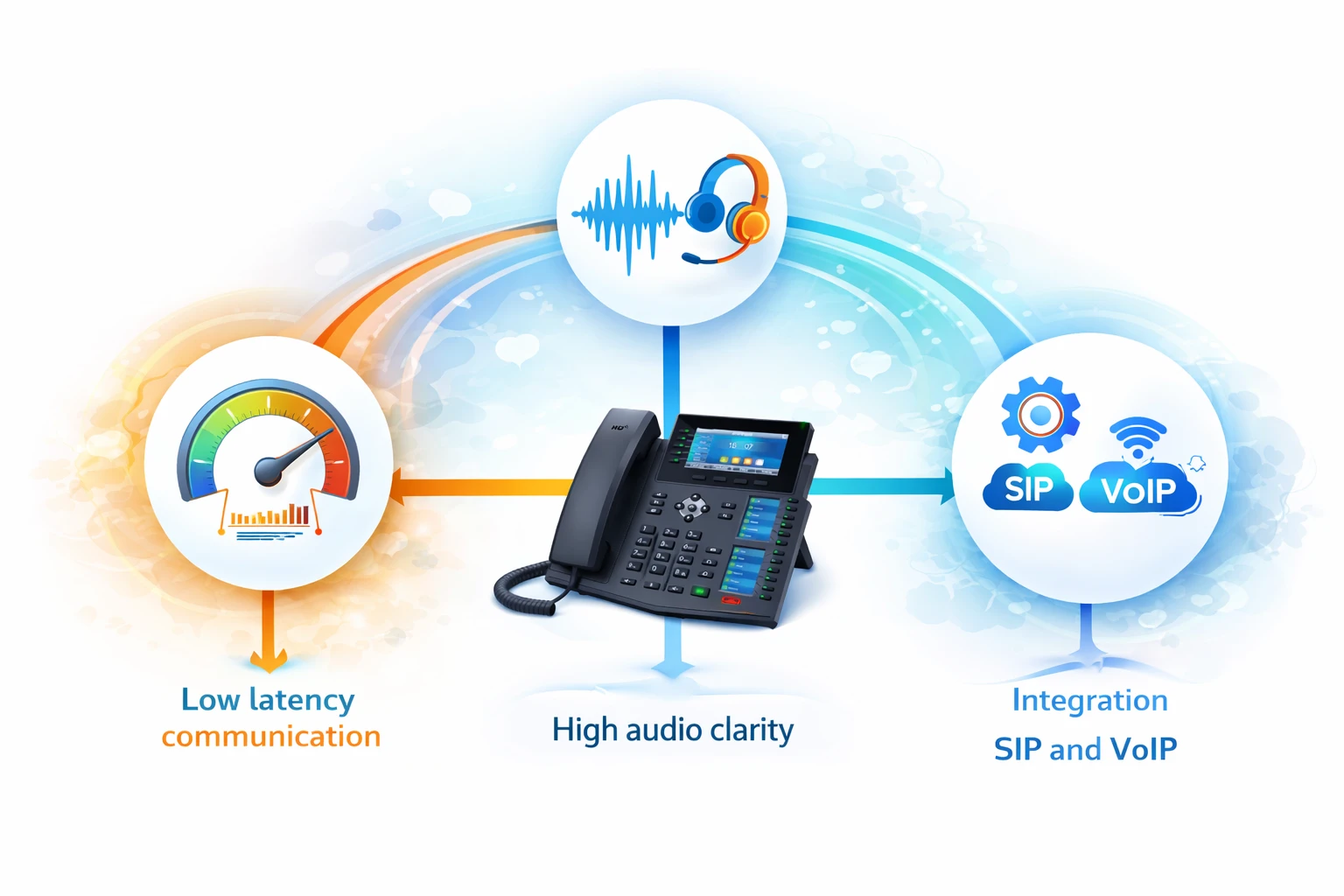
Effektives Vollduplex-Audio verbindet gleichzeitigen Sprachfluss mit Echokontrolle, niedriger Latenz und klarer Sprachreproduktion.
Technische Merkmale von Vollduplex-Systemen
Echokontrolle, Rauschunterdrückung und DSP
Die meisten modernen Vollduplex-Geräte nutzen DSP-basierte Audioverbesserung. Die Echokompensation ist meist die wichtigste Funktion, aber sie ist selten die einzige. Rauschunterdrückung, automatische Verstärkungsanpassung, Mikrofonoptimierung und Lautsprecherabstimmung sind ebenfalls üblich. Zusammen helfen diese Funktionen dem Gerät, in realen Umgebungen nutzbar zu bleiben – nicht nur unter idealen Laborbedingungen.
Bei Industrie- und öffentlichen Kommunikationsprodukten wird DSP noch wichtiger, weil die akustische Umgebung oft schwierig ist. Maschinenlärm, reflektierende Oberflächen, Wind und Abstand zum Sprecher beeinträchtigen die Leistung. Vollduplex-Geräte für diese Umgebungen müssen so konstruiert sein, dass sie verständliche Sprache bewahren, selbst wenn die Umgebung nicht leise ist.
Deshalb sollte die Produktauswahl mehr berücksichtigen, als ob „Vollduplex“ auf einem Datenblatt steht. Die Qualität der Audioverarbeitungs-Implementierung beeinflusst die Ergebnisse in der Praxis erheblich.
Breitbandaudio und Codec-Unterstützung
Ein weiteres wichtiges technisches Merkmal ist die Codec-Fähigkeit. Vollduplex-Systeme arbeiten oft besser, wenn sie Breitband-Codecs verwenden, die mehr Sprachdetails bewahren als schmalbandige Legacy-Audioformate. Codecs wie G.722 oder andere HD-Voice-Optionen können die Verständlichkeit verbessern, insbesondere in professionellen SIP- und VoIP-Umgebungen.
Die Codec-Unterstützung allein garantiert jedoch kein überragendes Erlebnis. Das Mikrofon des Endgeräts, das Lautsprecherdesign, die Gehäuseakustik und das Netzwerkverhalten müssen diese Fähigkeit ebenfalls unterstützen. Ein Breitband-Codec mag Sprachdetails bewahren, aber eine schlechte Echobehandlung oder eine instabile Paketzustellung können die Kommunikationsqualität dennoch beeinträchtigen.
Aus diesem Grund sollte die Vollduplex-Qualität als Ergebnis der gesamten Sprachkette betrachtet werden – von der Erfassung über den Transport bis zur Wiedergabe.
Integration mit SIP- und VoIP-Systemen
In modernen Bereitstellungen ist Vollduplex üblicherweise in die SIP-basierte Kommunikationsarchitektur integriert. SIP übernimmt die Sitzungseinrichtung und -steuerung, während RTP oder ein verwandter Medientransport die bidirektionalen Audioströme befördert. Dies ermöglicht Vollduplex-Endgeräte die Teilnahme an Unternehmenstelefonie, Intercom-Plattformen, Durchsageanlagen, Unified-Communication-Umgebungen und Leitstellennetzen.
Der Vorteil dieser Integration ist Flexibilität. Eine Vollduplex-SIP-Gegensprechanlage kann ein Tischtelefon anrufen, sich mit einer Leitstelle verbinden, einem Durchsage-Workflow beitreten oder Teil eines breiteren Vorfallreaktionssystems werden. In diesen Fällen verbessert Vollduplex das lokale Audioerlebnis, während SIP und VoIP die größere Netzwerkreichweite und das Verwaltungsframework bereitstellen.
Infolgedessen wird Vollduplex zunehmend nicht als eigenständige Fähigkeit, sondern als Standarderwartung an professionelle IP-Sprach-Endgeräte angesehen.
Anwendungen von Vollduplex
VoIP-Telefonie und Unified Communications
Traditionelle Tischtelefone, Softphones, Konferenzgeräte und Geschäfts-Sprachplattformen sind stark auf Vollduplex-Audio angewiesen, weil Benutzer natürliche Gespräche erwarten. In der Unternehmenskommunikation ist gleichzeitiges Sprechen notwendig für Besprechungen, schnelle Koordination, Kundeninteraktion und die tägliche Zusammenarbeit im Büro.
Innerhalb von Unified Communications unterstützt Vollduplex auch ein nahtloseres Erlebnis über Geräte und Standorte hinweg. Ob Benutzer von einem Schreibtisch-Endgerät, einem mobilen Client oder einem Besprechungsraumgerät sprechen – die Erwartung ist dieselbe: klares, latenzarmes Gespräch ohne Beschränkungen durch Sprechwechsel.
Das ist einer der Gründe, warum Vollduplex in der modernen IP-Telefonie zum Standard geworden ist. Es deckt sich sowohl mit den Benutzererwartungen als auch mit den betrieblichen Anforderungen.
SIP-Gegensprechanlagen, Durchsage und industrielle Kommunikation
Vollduplex ist auch in SIP-Gegensprechanlagen und industriellen Kommunikationssystemen äußerst wertvoll. In einer Fabrik, einem Tunnel, einem Versorgungskorridor, einem Werksgeländeeingang oder einer Schrankenstation benötigen Benutzer häufig eine Freisprech- oder Lautsprecherbetrieb-Interaktion. In diesen Fällen hilft gleichzeitiges Audio, dass Gespräche schnell vorankommen – besonders wenn eine Seite Anleitung, Erlaubnis oder sofortige Bestätigung benötigt.
Für industrielle und publikumsorientierte Gegensprechanlagen wird Vollduplex noch wichtiger, wenn das Gerät Teil eines operativen Arbeitsablaufs ist. Ein Außendienstmitarbeiter muss möglicherweise ein Problem melden, während er Anweisungen hört. Ein Besucher benötigt möglicherweise Hilfe über einen Außenhilfepunkt. Eine Wachstation muss möglicherweise den Zugang in Echtzeit hinterfragen und überprüfen. Diese Interaktionen sind schneller und klarer, wenn der Audiopfad in beide Richtungen immer offen ist.
Aus diesem Grund bewerben viele fortschrittliche SIP-Gegensprechanlagen und Notfallkommunikationsendgeräte Vollduplex als wichtigen funktionalen Vorteil.
Notfallreaktion und Leitsysteme
In Notfall- und Leitstellenumgebungen kann Vollduplex die Reaktionsfähigkeit direkt verbessern. Disponenten, Operatoren, Einsatzkräfte und Feldpersonal benötigen oft überlappende Gespräche, sofortige Korrekturmöglichkeiten und dynamische Koordination. Das Warten auf Sprechwechsel kann den Austausch kritischer Informationen verlangsamen.
Eine Vollduplex-Umgebung unterstützt eine flüssigere Einsatz-Kommunikation. Der Operator kann Anweisungen geben, während er Live-Feedback hört, und Feldnutzer können mit Aktualisierungen oder Warnungen unterbrechen, sobald sich die Bedingungen ändern. Dies macht Vollduplex besonders nützlich in Krankenhäusern, der Verkehrssteuerung, Sicherheitsoperationen, industriellen Notfallsystemen und öffentlichen Sicherheitsunterstützungsumgebungen.
Wo die Kommunikationsqualität die Lagewahrnehmung beeinflusst, ist Vollduplex oft der bevorzugte Modus, weil es sowohl Geschwindigkeit als auch Klarheit unter Druck unterstützt.

Vollduplex wird häufig in Unternehmenstelefonie, Gegensprechanlagen, Leitstellen und Notfallkommunikationssystemen eingesetzt.
In hochwertigen Kommunikumgebungen geht es bei Vollduplex nicht nur um Bequemlichkeit. Es unterstützt schnellere Entscheidungen, klarere Koordination und zuverlässigere menschliche Interaktion.
Fazit
Warum Vollduplex wichtig ist
Vollduplex ist wichtig, weil professionelle Kommunikation ebenso sehr vom Timing wie vom Klang abhängt. Durch die gleichzeitige bidirektionale Audioübertragung entsteht ein natürlicheres, effizienteres und genaueres Interaktionsmodell. Es verbessert die Benutzererfahrung, ermöglicht schnellere Klärung und reduziert die Reibung, die mit einer Kommunikation per Sprechwechsel einhergeht.
Aus technischer Sicht erfordert eine gute Vollduplex-Leistung mehr als das bloße Aktivieren von beiden Medienrichtungen. Sie hängt von Echokompensation, DSP-Qualität, latenzarmen Netzwerken und einem soliden Endgerätedesign ab. Aus Anwendungssicht spielt sie eine wichtige Rolle in VoIP-Telefonie, SIP-Gegensprechanlagen, Leitstellen, Durchsage- und Notfallreaktionssystemen.
Da Kommunikationsnetze zunehmend integrierter und echtzeitfähiger werden, bleibt Vollduplex eine der wichtigsten Fähigkeiten für eine klare und zuverlässige Sprachinteraktion.
Häufig gestellte Fragen (FAQ)
Ist Vollduplex besser als Halbduplex?
Für die meisten natürlichen Sprachgespräche: Ja. Vollduplex ermöglicht es beiden Seiten, gleichzeitig zu sprechen und zu hören, während Halbduplex einen Sprechwechsel erzwingt. Das macht Vollduplex besser geeignet für Telefonie, Gegensprechanlagen, Konferenzen und Leitstellenkommunikation.
Warum ist Echokompensation in Vollduplex-Systemen wichtig?
Weil das Gerät eingehende Sprache über einen Lautsprecher wiedergeben und gleichzeitig die lokale Sprache über ein Mikrofon erfassen kann. Ohne Echokompensation könnte der entfernte Benutzer sein eigenes reflektiertes Echo hören, was die Klarheit und den Komfort beeinträchtigt.
Wird Vollduplex nur in Bürotelefonen verwendet?
Nein. Es wird auch häufig in SIP-Gegensprechanlagen, industriellen Kommunikationsendgeräten, Leitstellenkonsolen, Notrufsäulen und vielen anderen IP-Sprachsystemen eingesetzt, bei denen eine natürliche Zwei-Wege-Konversation benötigt wird.
Hängt Vollduplex von der Netzwerkqualität ab?
Ja. Geringe Latenz, stabile Paketzustellung, geeignete QoS-Richtlinien und eine passende Codec-Behandlung tragen alle zu einer guten Vollduplex-Leistung in VoIP- und SIP-Umgebungen bei.