
Wie registriert man Industriegeräte bei einem PortSIP-Server?

Einleitung

Übersicht

Wenn ein Gerät über ein registriertes SIP-Konto kommunizieren muss, muss ein SIP-Server verfügbar sein und das Konto auf dem Gerät registriert sein. Diese Anleitung erklärt, wie Sie Industrie-Geräte auf einem PortSIP-Server registrieren.

Anwendbare Modelle

Alle unsere Innenmonitore, Zutrittskontrollgeräte und Gegensprechprodukte. In dieser Anleitung werden die Modelle Bi52W und Bi63 als Beispiele verwendet.

Netzwerkverbindungsdiagramm

Verbinden Sie den PC, das Bi63 und das Bi53W mit demselben lokalen Netzwerk, wie unten dargestellt.
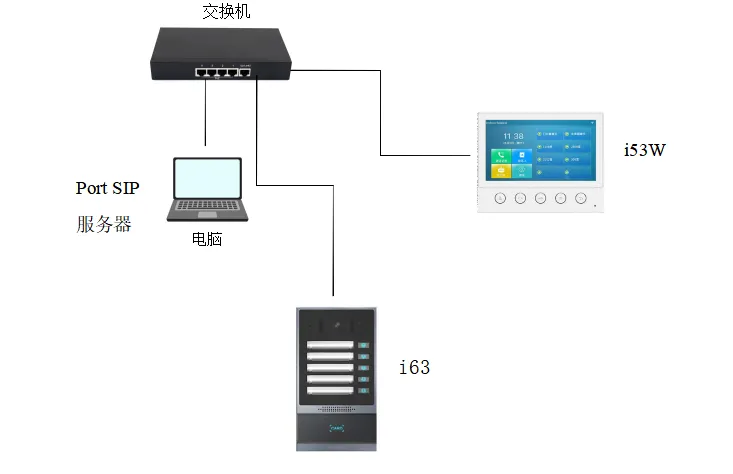
Netzwerkverbindungsdiagramm

Registrierung auf einem PortSIP-Server

Eine Nebenstelle auf dem Server hinzufügen

Bevor Sie das Gerät auf dem PortSIP-Server registrieren, muss die Serverumgebung eingerichtet werden. In diesem Beispiel wird ein auf einem PC installierter PortSIP-Server verwendet, um den Prozess zu demonstrieren.

Fügen Sie eine Nebenstelle hinzu.

Melden Sie sich an der Weboberfläche des Servers an und gehen Sie zu Anrufverwaltung —— Nebenstellenbenutzer. Klicken Sie auf die Schaltfläche Hinzufügen und geben Sie dann die Nebenstelleinnummer und das Passwort ein, um ein neues Nebenstellenkonto zu erstellen, wie unten dargestellt.
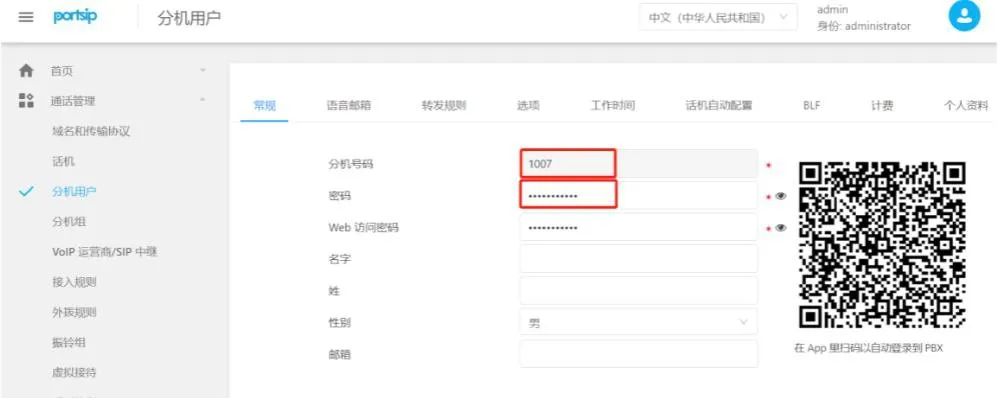
Seite zum Hinzufügen einer Nebenstelle

Überprüfen Sie die Servereinstellungen für Domäne und Transportprotokoll.

Gehen Sie zu Anrufverwaltung —— Domäne und Transportprotokoll, um die vom Server verwendete SIP-Domäne, das Transportprotokoll und die entsprechende Portnummer anzuzeigen, wie unten dargestellt.
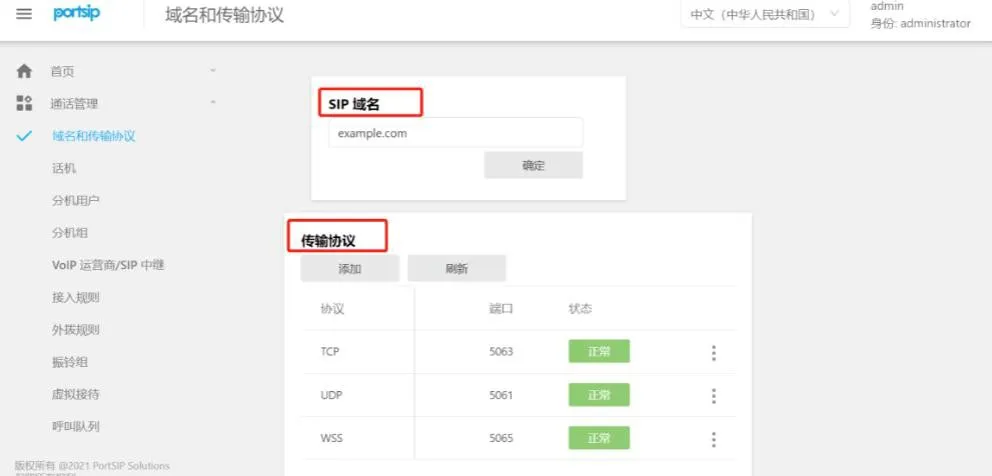
Domänen- und Transportprotokolleinstellungen

Geräte-IP-Adresse ermitteln, anmelden und Gerät auf dem Server registrieren

Überprüfen und ermitteln Sie die Geräte-IP-Adresse.

Für Zutrittskontroll- und Gegensprechgeräte: Halten Sie die DSS-Taste 10 Sekunden lang gedrückt, bis Sie einen Piepton hören, drücken Sie sie dann schnell einmal, und das Gerät gibt seine IP-Adresse bekannt.

Für Innenmonitore:

Modelle ohne Touchscreen: i51W, i52W Halten Sie die OK-Taste gedrückt, gehen Sie dann zu Systeminformationen —— Netzwerk —— IPv4.

Touchscreen-Modelle: i53W, i56A Gehen Sie zu Menü —— Status —— Netzwerk —— IPv4.

Öffnen Sie einen Browser und geben Sie die IP-Adresse des Geräts ein.

Eingabe der Geräte-IP-Adresse im Browser

Der Standardbenutzername und das Standardpasswort sind beide admin.
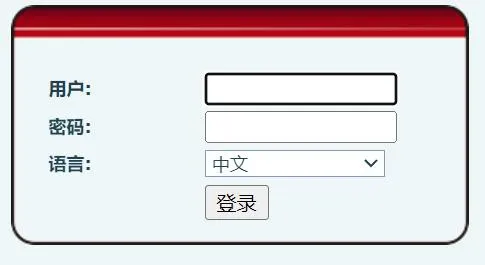
Anmeldeseite des Geräts

Gehen Sie zu LeitungSIPRegistrierungseinstellungen. Geben Sie die Kontoinformationen, das Passwort, den Port, die Serveradresse und andere erforderliche Details ein und klicken Sie dann auf Senden.

(1) Benutzername, Authentifizierungsbenutzer und Passwort: Dies sind die auf dem Server erstellte Nebenstelleinnummer und das Passwort.

(2) Serveradresse: Geben Sie die SIP-Domäne des PortSIP-Servers ein.

(3) Serverport und Transportprotokoll: Verwenden Sie das Transportprotokoll und den entsprechenden Port, die in den PortSIP-Domänen- und Transporteinstellungen definiert sind. In diesem Beispiel werden UDP und der entsprechende Port verwendet.

(4) Proxy-Server und Port: In diesem Beispiel erfolgt die Registrierung innerhalb des lokalen Netzwerks. Da der Server auf einem PC installiert ist, sollte der Proxy-Server die statische IP-Adresse dieses PCs sein, und der Port sollte mit dem Port übereinstimmen, der vom ausgewählten Transportprotokoll verwendet wird.

(5) Nachdem alle Einstellungen eingegeben wurden, stellen Sie sicher, dass das Gerät und der Server über das Netzwerk kommunizieren können. Nach erfolgreicher Registrierung ändert sich der Leitungsstatus auf dem Gerät zu Registriert, was bedeutet, dass das SIP-Konto erfolgreich auf dem PortSIP-Server registriert wurde.
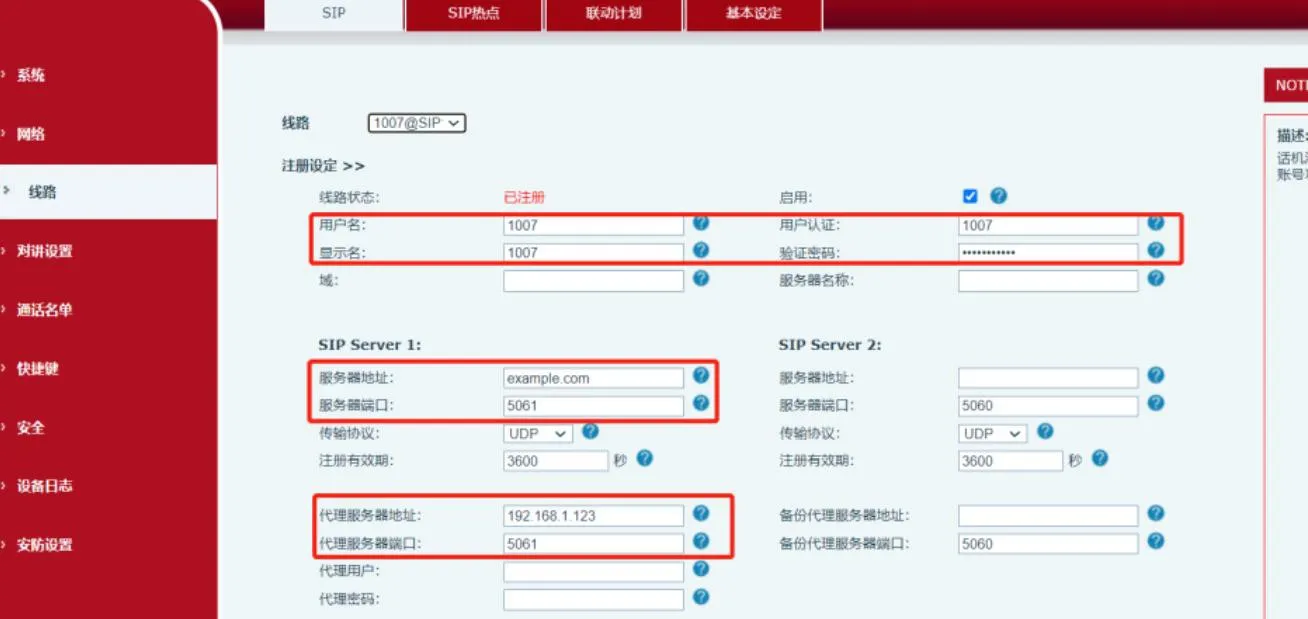

SIP-Registrierungseinstellungsseite

Katalog
Kundenservice Telefon
We use cookie to improve your online experience. By continuing to browse this website, you agree to our use of cookie.

Cookies

This Cookie Policy explains how we use cookies and similar technologies when you access or use our website and related services. Please read this Policy together with our Terms and Conditions and Privacy Policy so that you understand how we collect, use, and protect information.

By continuing to access or use our Services, you acknowledge that cookies and similar technologies may be used as described in this Policy, subject to applicable law and your available choices.

Updates to This Cookie Policy

We may revise this Cookie Policy from time to time to reflect changes in legal requirements, technology, or our business practices. When we make updates, the revised version will be posted on this page and will become effective from the date of publication unless otherwise required by law.

Where required, we will provide additional notice or request your consent before applying material changes that affect your rights or choices.

What Are Cookies?

Cookies are small text files placed on your device when you visit a website or interact with certain online content. They help websites recognize your browser or device, remember your preferences, support essential functionality, and improve the overall user experience.

In this Cookie Policy, the term “cookies” also includes similar technologies such as pixels, tags, web beacons, and other tracking tools that perform comparable functions.

Why We Use Cookies

We use cookies to help our website function properly, remember user preferences, enhance website performance, understand how visitors interact with our pages, and support security, analytics, and marketing activities where permitted by law.

We use cookies to keep our website functional, secure, efficient, and more relevant to your browsing experience.

Categories of Cookies We Use

Strictly Necessary Cookies

These cookies are essential for the operation of the website and cannot be disabled in our systems where they are required to provide the service you request. They are typically set in response to actions such as setting privacy preferences, signing in, or submitting forms.

Without these cookies, certain parts of the website may not function correctly.

Functional Cookies

Functional cookies enable enhanced features and personalization, such as remembering your preferences, language settings, or previously selected options. These cookies may be set by us or by third-party providers whose services are integrated into our website.

If you disable these cookies, some services or features may not work as intended.

Performance and Analytics Cookies

These cookies help us understand how visitors use our website by collecting information such as traffic sources, page visits, navigation behavior, and general interaction patterns. In many cases, this information is aggregated and does not directly identify individual users.

We use this information to improve website performance, usability, and content relevance.

Targeting and Advertising Cookies

These cookies may be placed by our advertising or marketing partners to help deliver more relevant ads and measure the effectiveness of campaigns. They may use information about your browsing activity across different websites and services to build a profile of your interests.

These cookies generally do not store directly identifying personal information, but they may identify your browser or device.

First-Party and Third-Party Cookies

Some cookies are set directly by our website and are referred to as first-party cookies. Other cookies are set by third-party services, such as analytics providers, embedded content providers, or advertising partners, and are referred to as third-party cookies.

Third-party providers may use their own cookies in accordance with their own privacy and cookie policies.

Information Collected Through Cookies

Depending on the type of cookie used, the information collected may include browser type, device type, IP address, referring website, pages viewed, time spent on pages, clickstream behavior, and general usage patterns.

This information helps us maintain the website, improve performance, enhance security, and provide a better user experience.

Your Cookie Choices

You can control or disable cookies through your browser settings and, where available, through our cookie consent or preference management tools. Depending on your location, you may also have the right to accept or reject certain categories of cookies, especially those used for analytics, personalization, or advertising purposes.

Please note that blocking or deleting certain cookies may affect the availability, functionality, or performance of some parts of the website.

Restricting cookies may limit certain features and reduce the quality of your experience on the website.

Cookies in Mobile Applications

Where our mobile applications use cookie-like technologies, they are generally limited to those required for core functionality, security, and service delivery. Disabling these essential technologies may affect the normal operation of the application.

We do not use essential mobile application cookies to store unnecessary personal information.

How to Manage Cookies

Most web browsers allow you to manage cookies through browser settings. You can usually choose to block, delete, or receive alerts before cookies are stored. Because browser controls vary, please refer to your browser provider’s support documentation for details on how to manage cookie settings.

Contact Us

If you have any questions about this Cookie Policy or our use of cookies and similar technologies, please contact us at support@becke.cc .