Industrieller Telefonanruf zur Multicast-Funktion Einführung

Einleitung

Übersicht

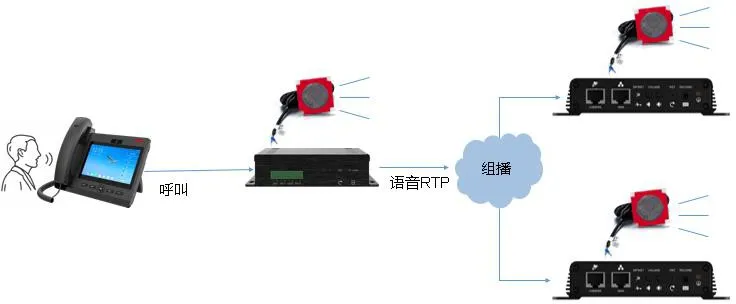
Dieses Dokument beschreibt die Funktion „Anruf zu Multicast“ des Geräts. Bei der Funktion Anruf zu Multicast sendet das Gerät nach Empfang eines Anrufs das entfernte Audiosignal an das Multicast-Netzwerk, sodass andere Geräte im Netzwerk den Stream empfangen und wiedergeben können. Gleichzeitig gibt das angerufene Gerät das Audio über seinen eigenen Lautsprecher wieder.

Kompatible Modelle

Alle aktuellen vom Unternehmen vertriebenen Modelle; ausgelaufene Produkte (EOL) sind nicht enthalten.

Funktionsweise von Anruf zu Multicast

Ein normaler Anruf findet zwischen zwei Geräten mit Vollduplex-Zweiwege-Audio statt. Die Funktion Anruf zu Multicast erweitert dies auf Rundfunkanwendungen. Bei dieser Funktion ist der Anrufer typischerweise ein IP-Telefon und der Empfänger ein Rundfunkgerät wie das BK-DAB-PA3. Nach Empfang des Anrufs und des Audiosignals gibt der Empfänger den Ton lokal wieder und leitet ihn an eine konfigurierte Multicast-Adresse weiter. Ein oder mehrere Multicast-Empfänger geben das Audio anschließend gleichzeitig wieder.
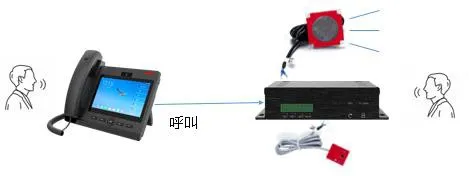
Normal Call Diagram

Abbildung 1 Normaler Anruf

Call to Multicast Diagram

Abbildung 2 Anruf zu Multicast

Anwendungsfälle

Anwendungsfall 1: Rundfunk-Paging
Ein IP-Telefon ruft ein BK-DAB-PA3 Rundfunkgerät an, um eine gesamte Gruppe zu durchsagen.
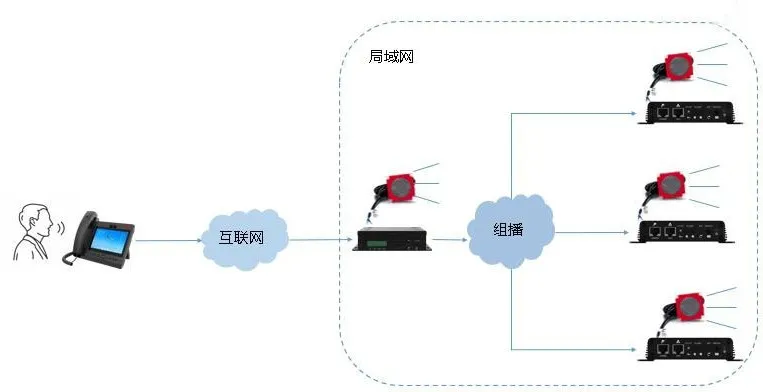
IP Phone Paging to Broadcast Device

Anwendungsfall 2: Audioverstärkung
Das IP-Telefon verstärkt eingehende Audiosignale.
Hinweis: Vermeiden Sie Rückkopplungen durch passende Lautstärke und Abstand zwischen Sender und Empfänger.
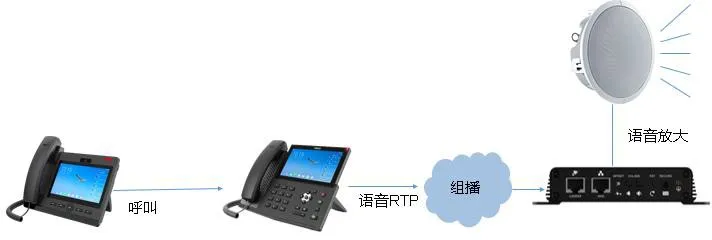
IP Phone Audio Amplification

Voraussetzungen

  1. Bereiten Sie mindestens 2 Rundfunkgeräte vor, die an einen PoE-Switch mit gültigen Netzwerk-IP-Adressen angeschlossen sind.

  2. Bereiten Sie einen Konfigurations-PC im selben lokalen Netzwerk vor, der auf die Geräte zugreifen kann.

Verdrahtungsplan

Verbinden Sie IP-Telefone und PA-Rundfunkgeräte wie unten gezeigt mit dem PoE-Switch.

Device Connection Diagram

Bedienungsanleitung

Vor der Nutzung von Anruf zu Multicast müssen die Geräte konfiguriert werden. Dieses Dokument verwendet F600S (Anrufer), PA3 (Multicast-Sender) sowie PA2 / PA2S (Multicast-Empfänger) als Beispiele. Die Konfiguration umfasst: 1. Konfiguration des PA3 Multicast-Senders 2. Konfiguration des PA2 / PA2S Multicast-Empfängers 3. Anrufkonfiguration zwischen F600S ↔ PA3 (siehe weitere FAQs)

Konfiguration des PA3 Multicast-Senders

Der Sender verwendet die Funktion Aktionsplan. Dieser gleicht die anrufende Nummer und die Anrufrichtung ab und führt anschließend die Multicast-Aktion aus.
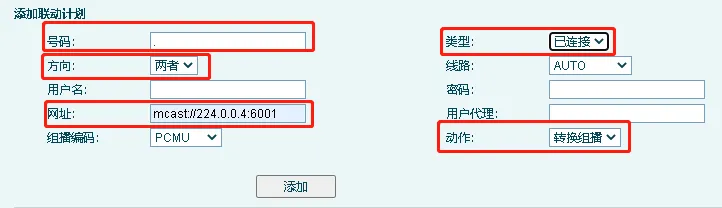
PA3 Multicast Sender Configuration

Felder:
- Nummer: Abgleich mit der Anrufer-ID. Verwenden Sie „.“ als Platzhalter für beliebige Zahlen, z. B. „71.“ passt zu 71xx. Auch IP-Präfixe wie „172.18.8.“ werden unterstützt.
Hinweis: „.“ ist ein Punkt-Platzhalter.
- Typ: Wählen Sie Connected (Multicast nach Annahme des Anrufs starten).
- Richtung: Beides, Eingehend oder Ausgehend.
- URL: Multicast-Adresse im Format: mcast://IP:Port
 IP-Bereich: 224.0.0.0 – 239.255.255.255
 Port: 1–65535 (empfohlen ≥1000)
- Aktion: Wählen Sie Zu Multicast umwandeln.

Konfiguration des Multicast-Empfängers

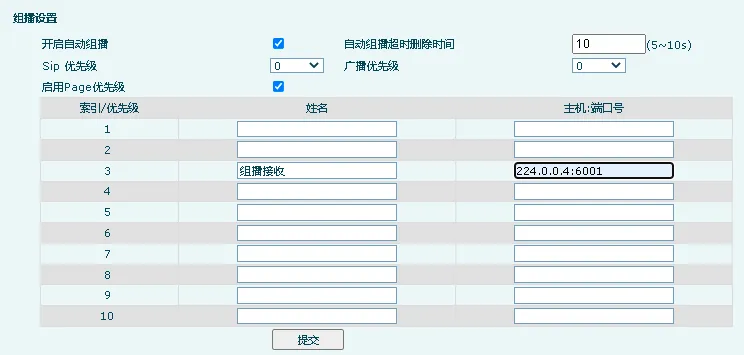
Melden Sie sich auf der Web-Oberfläche von PA2 / PA2S an. Navigieren Sie zu Einstellungen → Multicast. Geben Sie dieselbe Multicast-IP und denselben Port wie beim Sender ein.
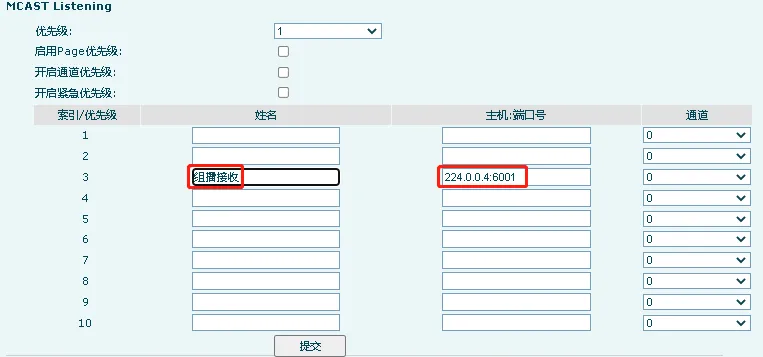
PA2S Multicast Receiver

Abbildung 1 PA2S Multicast-Empfänger

PA2 Multicast Receiver

Abbildung 2 PA2 Multicast-Empfänger

Felder:
- Index/Priorität: Niedrigere Nummer = höhere Priorität (1 = höchste Priorität). Höhere Prioritäten können niedrigere unterbrechen.
- Name: Benutzdefinierter Name.
- Host:Port: Muss exakt mit dem Sender übereinstimmen.
- Kanal: Auf 0 belassen (nur zur Kompatibilität mit Polycom).

Fehlerbehebung: Anruf zu Multicast funktioniert nicht

Falls die Funktion nach der Konfiguration nicht funktioniert, prüfen Sie folgende Punkte:

  1. Stellen Sie sicher, dass Sender und Empfänger im selben lokalen Netzwerk sind. Multicast darf nicht durch Switches, Router oder VLANs blockiert werden.

  2. Überprüfen Sie, ob die Nummer-Regel des Senders mit der Nummer des Anrufers übereinstimmt. Bei fehlender Übereinstimmung startet kein Multicast.

Katalog
Kundenservice Telefon
We use cookie to improve your online experience. By continuing to browse this website, you agree to our use of cookie.

Cookies

This Cookie Policy explains how we use cookies and similar technologies when you access or use our website and related services. Please read this Policy together with our Terms and Conditions and Privacy Policy so that you understand how we collect, use, and protect information.

By continuing to access or use our Services, you acknowledge that cookies and similar technologies may be used as described in this Policy, subject to applicable law and your available choices.

Updates to This Cookie Policy

We may revise this Cookie Policy from time to time to reflect changes in legal requirements, technology, or our business practices. When we make updates, the revised version will be posted on this page and will become effective from the date of publication unless otherwise required by law.

Where required, we will provide additional notice or request your consent before applying material changes that affect your rights or choices.

What Are Cookies?

Cookies are small text files placed on your device when you visit a website or interact with certain online content. They help websites recognize your browser or device, remember your preferences, support essential functionality, and improve the overall user experience.

In this Cookie Policy, the term “cookies” also includes similar technologies such as pixels, tags, web beacons, and other tracking tools that perform comparable functions.

Why We Use Cookies

We use cookies to help our website function properly, remember user preferences, enhance website performance, understand how visitors interact with our pages, and support security, analytics, and marketing activities where permitted by law.

We use cookies to keep our website functional, secure, efficient, and more relevant to your browsing experience.

Categories of Cookies We Use

Strictly Necessary Cookies

These cookies are essential for the operation of the website and cannot be disabled in our systems where they are required to provide the service you request. They are typically set in response to actions such as setting privacy preferences, signing in, or submitting forms.

Without these cookies, certain parts of the website may not function correctly.

Functional Cookies

Functional cookies enable enhanced features and personalization, such as remembering your preferences, language settings, or previously selected options. These cookies may be set by us or by third-party providers whose services are integrated into our website.

If you disable these cookies, some services or features may not work as intended.

Performance and Analytics Cookies

These cookies help us understand how visitors use our website by collecting information such as traffic sources, page visits, navigation behavior, and general interaction patterns. In many cases, this information is aggregated and does not directly identify individual users.

We use this information to improve website performance, usability, and content relevance.

Targeting and Advertising Cookies

These cookies may be placed by our advertising or marketing partners to help deliver more relevant ads and measure the effectiveness of campaigns. They may use information about your browsing activity across different websites and services to build a profile of your interests.

These cookies generally do not store directly identifying personal information, but they may identify your browser or device.

First-Party and Third-Party Cookies

Some cookies are set directly by our website and are referred to as first-party cookies. Other cookies are set by third-party services, such as analytics providers, embedded content providers, or advertising partners, and are referred to as third-party cookies.

Third-party providers may use their own cookies in accordance with their own privacy and cookie policies.

Information Collected Through Cookies

Depending on the type of cookie used, the information collected may include browser type, device type, IP address, referring website, pages viewed, time spent on pages, clickstream behavior, and general usage patterns.

This information helps us maintain the website, improve performance, enhance security, and provide a better user experience.

Your Cookie Choices

You can control or disable cookies through your browser settings and, where available, through our cookie consent or preference management tools. Depending on your location, you may also have the right to accept or reject certain categories of cookies, especially those used for analytics, personalization, or advertising purposes.

Please note that blocking or deleting certain cookies may affect the availability, functionality, or performance of some parts of the website.

Restricting cookies may limit certain features and reduce the quality of your experience on the website.

Cookies in Mobile Applications

Where our mobile applications use cookie-like technologies, they are generally limited to those required for core functionality, security, and service delivery. Disabling these essential technologies may affect the normal operation of the application.

We do not use essential mobile application cookies to store unnecessary personal information.

How to Manage Cookies

Most web browsers allow you to manage cookies through browser settings. You can usually choose to block, delete, or receive alerts before cookies are stored. Because browser controls vary, please refer to your browser provider’s support documentation for details on how to manage cookie settings.

Contact Us

If you have any questions about this Cookie Policy or our use of cookies and similar technologies, please contact us at support@becke.cc .