
SIP Phone Configuration File Encryption Einführung

Einführung

Überblick

Aufgrund der bequemen Batch-Bereitstellung nutzen immer mehr Kunden diese Methode, um IP-Telefone bereitzustellen. Während der Batch-Bereitstellung werden Konfigurationsdateien jedoch zwangsläufig über das Netzwerk übertragen. Konfigurationsdateien enthalten zahlreiche sensible Informationen, wie SIP-Konten und Passwörter, Administratorpasswörter der Telefone, Zugangsdaten für Netzwerk-Telefonbuchkonten und mehr.

Um Informationslecks zu vermeiden, können wir ein Verschlüsselungstool verwenden, um Konfigurationsdateien zu verschlüsseln. Dieses Dokument behandelt hauptsächlich die folgenden zwei Teile:

  1. Wie Konfigurationsdateien verschlüsselt werden

  2. Wie verschlüsselte Konfigurationsdateien bei der Batch-Bereitstellung verwendet werden

Anwendbare Modelle

Dieses Dokument gilt für alle Serien von IP-Telefonen unseres Unternehmens.

Wie Konfigurationsdateien verschlüsselt werden

Verschlüsseln von Konfigurationsdateien unter Windows

Wir können das DSC-Tool verwenden, um Konfigurationsdateien mit AES256 zu verschlüsseln. Das Tool kann heruntergeladen werden unter: http://download.fanvil.com/tool/AES%20tool/encryption.7z. Das folgende Beispiel erklärt, wie eine Konfigurationsdatei verschlüsselt wird:

  1. Laden Sie das DSC-Tool herunter, entpacken Sie es und legen Sie den Ordner auf Laufwerk F ab.
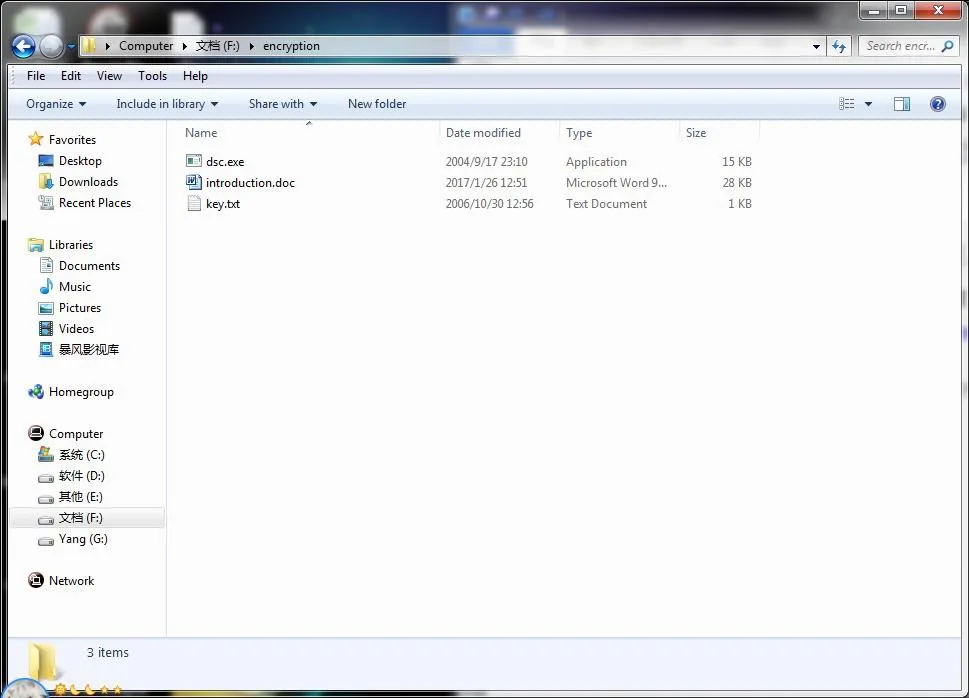
  2. DSC-Tool für Konfigurationsdatei herunterladen
  3. Öffnen Sie key.txt, verwenden Sie den standardmäßigen 64-Bit-Schlüssel oder geben Sie einen neuen zufälligen 64-Bit-Schlüssel ein und speichern Sie anschließend die Datei.

  4. Laden Sie die Konfigurationsdatei über die Weboberfläche des Telefons herunter, ändern Sie die erforderlichen Informationen, benennen Sie die Datei in config.txt um und legen Sie sie im Verzeichnis encryption auf Laufwerk F ab.
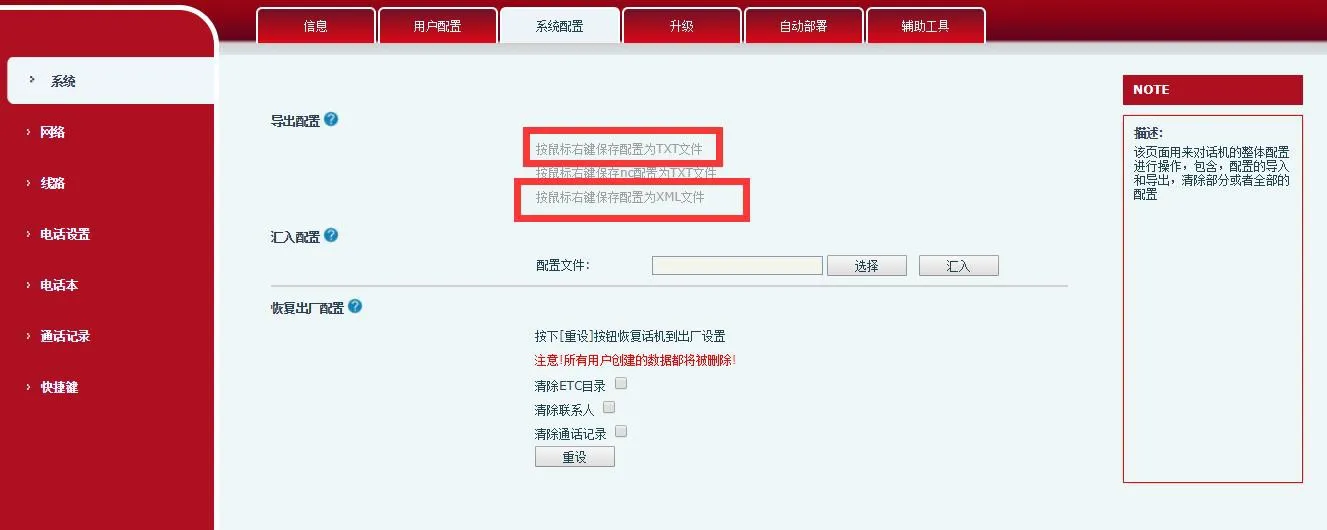
  5. Download-Oberfläche der Konfigurationsdatei über die Telefon-Weboberfläche
  6. Drücken Sie Win + R, geben Sie cmd ein, um die DOS-Eingabeaufforderung zu öffnen, und navigieren Sie anschließend mit dem im folgenden Bild gezeigten Befehl zum Verzeichnis encryption.
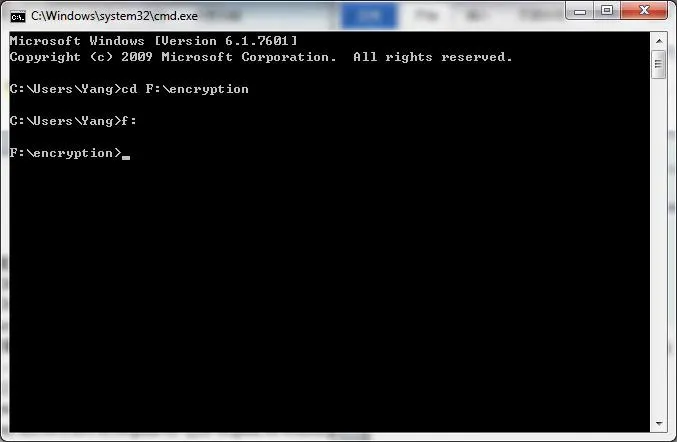
  7. DOS-Befehl in CMD ausführen
  8. Verwenden Sie die folgenden Befehle zum Verschlüsseln oder Entschlüsseln:

    Verschlüsselungsbefehl:
           dsc.exe key.txt e config.txt encrypted.txt
           - dsc.exe: ausführbare Datei des Tools
           - key.txt: Schlüsseldatei
           - e: Verschlüsselungskennzeichen
           - config.txt: Quell-Konfigurationsdatei
           - encrypted.txt: verschlüsselte Ausgabedatei, Name anpassbar

    Entschlüsselungsbefehl:
           dsc.exe key.txt d encrypted.txt original.txt
           - d: Entschlüsselungskennzeichen
           - encrypted.txt: verschlüsselte Quelldatei
           - original.txt: entschlüsselte Ausgabedatei, Name anpassbar
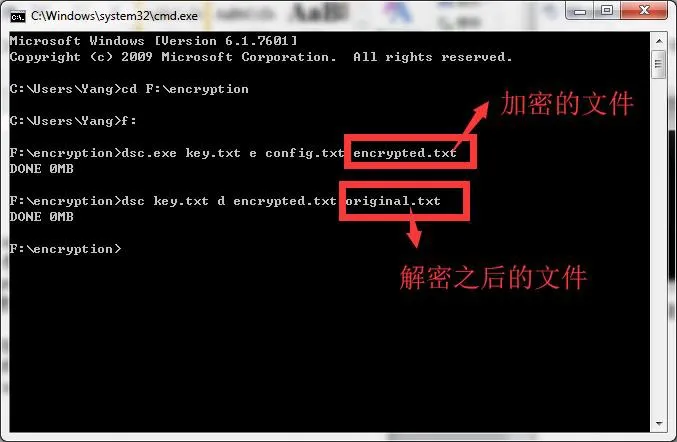
  9. Dateianzeige vor und nach der Entschlüsselung

Verschlüsseln von Konfigurationsdateien unter Linux

  1. Laden Sie den Quellcode über diesen Link herunter: https://1drv.ms/u/s!AhLXW_VNOC9LgR6TiW5931ydvEP5

  2. Entpacken Sie das heruntergeladene Paket unter Linux, wechseln Sie in das Verzeichnis und führen Sie den Kompilierungsbefehl aus, um das DSC-Tool zu erzeugen:    
    gcc dsc.c rijndael-alg-fst.c rijndael-api-fst.c -o dsc
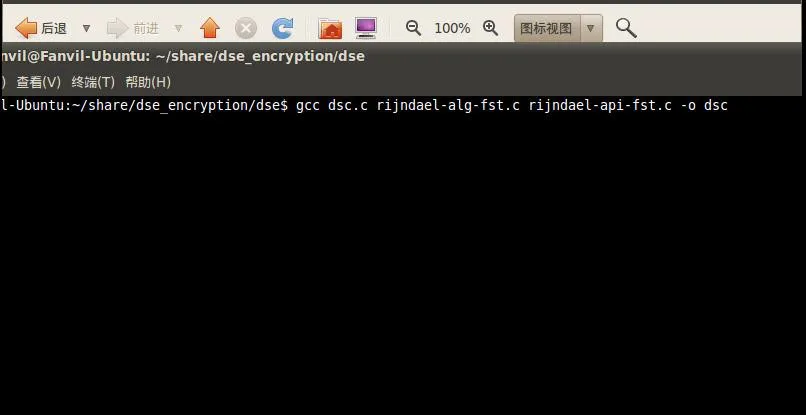
  3. Konfigurationsdatei herunterladen und entschlüsseln
  4. Nach der Ausführung wird das Tool dsc unter Linux erzeugt, wie unten gezeigt.
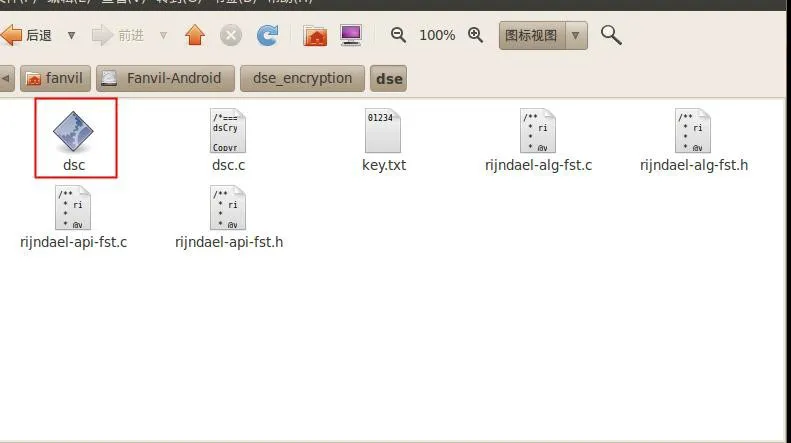
  5. DSC-Tool unter Linux erzeugt
  6. Legen Sie die zu verschlüsselnden oder zu entschlüsselnden Dateien im selben Verzeichnis wie das DSC-Tool ab.
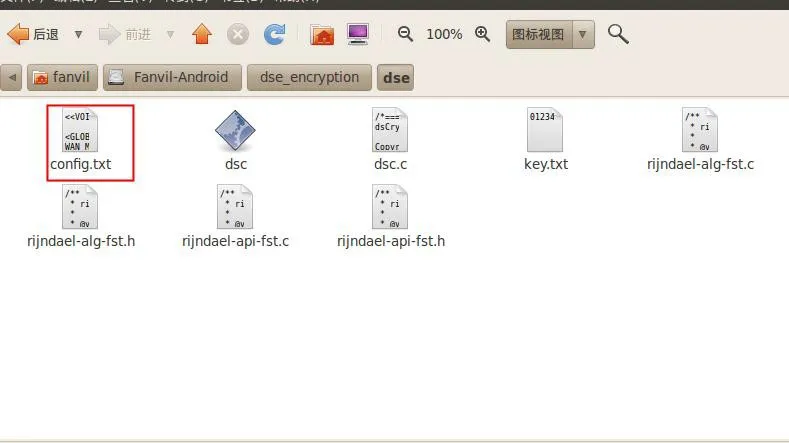
  7. Dateien im DSC-Verzeichnis ablegen
  8. Beispiel für einen Verschlüsselungsbefehl:
           dsc key.txt e config.txt encryption.enc
           - dsc: Toolname
           - key.txt: Schlüsseldatei
           - e: Verschlüsselung
           - config.txt: zu verschlüsselnde Datei
           - encryption.enc: verschlüsselte Ausgabedatei

  9. Beispiel für einen Entschlüsselungsbefehl:
           dsc key.txt d encrypted.txt config_after.txt
           - d: Entschlüsselung
           - encrypted.txt: zu entschlüsselnde Datei
           - config_after.txt: entschlüsselte Ausgabedatei

Wie verschlüsselte Konfigurationsdateien bei der Batch-Bereitstellung verwendet werden

Um Telefone mit verschlüsselten Konfigurationsdateien bereitzustellen, müssen Sie den Verschlüsselungsschlüssel in der Weboberfläche des Telefons konfigurieren, wie unten gezeigt:
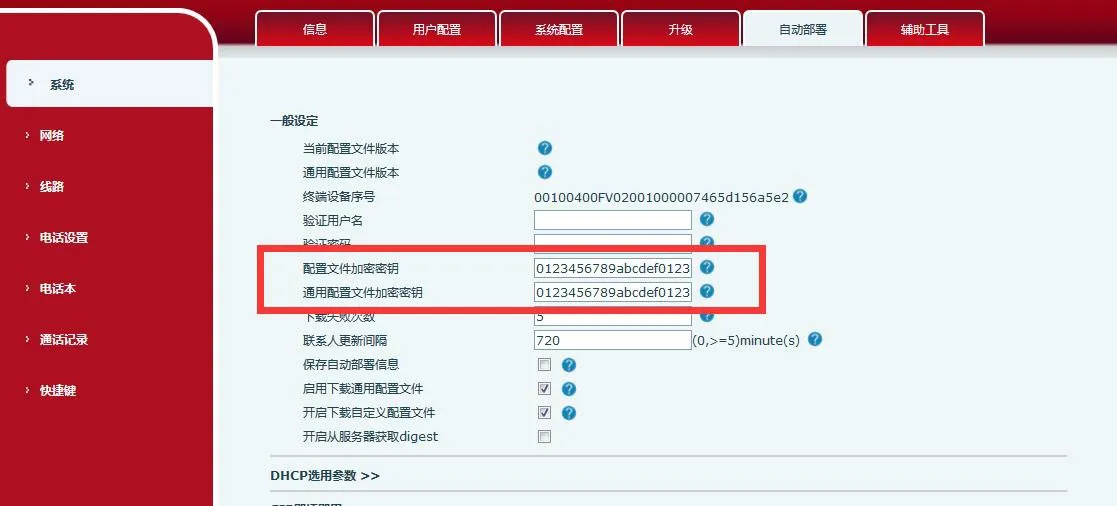
Verschlüsselungsschlüssel in der Telefon-Weboberfläche konfigurieren

Legen Sie abschließend die verschlüsselte Konfigurationsdatei, die in Abschnitt 2 erzeugt wurde, auf dem Provisioning-Server ab und konfigurieren Sie die korrekten Servereinstellungen auf den IP-Telefonen. Weitere Informationen finden Sie im Dokument Auto Provisioning Mechanism, Environment Setup, and Configuration File Guide.

Katalog
Kundenservice Telefon
We use cookie to improve your online experience. By continuing to browse this website, you agree to our use of cookie.

Cookies

This Cookie Policy explains how we use cookies and similar technologies when you access or use our website and related services. Please read this Policy together with our Terms and Conditions and Privacy Policy so that you understand how we collect, use, and protect information.

By continuing to access or use our Services, you acknowledge that cookies and similar technologies may be used as described in this Policy, subject to applicable law and your available choices.

Updates to This Cookie Policy

We may revise this Cookie Policy from time to time to reflect changes in legal requirements, technology, or our business practices. When we make updates, the revised version will be posted on this page and will become effective from the date of publication unless otherwise required by law.

Where required, we will provide additional notice or request your consent before applying material changes that affect your rights or choices.

What Are Cookies?

Cookies are small text files placed on your device when you visit a website or interact with certain online content. They help websites recognize your browser or device, remember your preferences, support essential functionality, and improve the overall user experience.

In this Cookie Policy, the term “cookies” also includes similar technologies such as pixels, tags, web beacons, and other tracking tools that perform comparable functions.

Why We Use Cookies

We use cookies to help our website function properly, remember user preferences, enhance website performance, understand how visitors interact with our pages, and support security, analytics, and marketing activities where permitted by law.

We use cookies to keep our website functional, secure, efficient, and more relevant to your browsing experience.

Categories of Cookies We Use

Strictly Necessary Cookies

These cookies are essential for the operation of the website and cannot be disabled in our systems where they are required to provide the service you request. They are typically set in response to actions such as setting privacy preferences, signing in, or submitting forms.

Without these cookies, certain parts of the website may not function correctly.

Functional Cookies

Functional cookies enable enhanced features and personalization, such as remembering your preferences, language settings, or previously selected options. These cookies may be set by us or by third-party providers whose services are integrated into our website.

If you disable these cookies, some services or features may not work as intended.

Performance and Analytics Cookies

These cookies help us understand how visitors use our website by collecting information such as traffic sources, page visits, navigation behavior, and general interaction patterns. In many cases, this information is aggregated and does not directly identify individual users.

We use this information to improve website performance, usability, and content relevance.

Targeting and Advertising Cookies

These cookies may be placed by our advertising or marketing partners to help deliver more relevant ads and measure the effectiveness of campaigns. They may use information about your browsing activity across different websites and services to build a profile of your interests.

These cookies generally do not store directly identifying personal information, but they may identify your browser or device.

First-Party and Third-Party Cookies

Some cookies are set directly by our website and are referred to as first-party cookies. Other cookies are set by third-party services, such as analytics providers, embedded content providers, or advertising partners, and are referred to as third-party cookies.

Third-party providers may use their own cookies in accordance with their own privacy and cookie policies.

Information Collected Through Cookies

Depending on the type of cookie used, the information collected may include browser type, device type, IP address, referring website, pages viewed, time spent on pages, clickstream behavior, and general usage patterns.

This information helps us maintain the website, improve performance, enhance security, and provide a better user experience.

Your Cookie Choices

You can control or disable cookies through your browser settings and, where available, through our cookie consent or preference management tools. Depending on your location, you may also have the right to accept or reject certain categories of cookies, especially those used for analytics, personalization, or advertising purposes.

Please note that blocking or deleting certain cookies may affect the availability, functionality, or performance of some parts of the website.

Restricting cookies may limit certain features and reduce the quality of your experience on the website.

Cookies in Mobile Applications

Where our mobile applications use cookie-like technologies, they are generally limited to those required for core functionality, security, and service delivery. Disabling these essential technologies may affect the normal operation of the application.

We do not use essential mobile application cookies to store unnecessary personal information.

How to Manage Cookies

Most web browsers allow you to manage cookies through browser settings. You can usually choose to block, delete, or receive alerts before cookies are stored. Because browser controls vary, please refer to your browser provider’s support documentation for details on how to manage cookie settings.

Contact Us

If you have any questions about this Cookie Policy or our use of cookies and similar technologies, please contact us at support@becke.cc .