
Becke IPGA-2E1 Trunk-Gateway ist für Organisationen konzipiert, die eine zuverlässige 2E1-Digitaltrunk-Anbindung in professionellen Sprachumgebungen benötigen. Es eignet sich hervorragend zur Integration traditioneller Telekommunikationszugänge mit SIP-basierten Kommunikationslösungen und hilft Unternehmen dabei, eine flexiblere, skalierbarere und besser verwaltbare Spracharchitektur für die Anbindung von IP-PBXs, anrufintensive Vorgänge und standortübergreifende Implementierungen aufzubauen. Für Unternehmen, die den Wert bestehender E1-Ressourcen erhalten möchten, während sie auf moderne IP-Kommunikation umstellen, bietet der IPGA-2E1 eine praktische und einfach zu implementierende Brücke zwischen Legacy-Infrastruktur und heutigen SIP-Plattformen.
In vielen Unternehmensprojekten entwickeln sich Kommunikationssysteme nicht auf einen Schlag. Digitaltrunks, leitungsseitige E1-Zugänge, interne PBX-Ressourcen und neuere SIP-basierte Systeme müssen bei Erweiterungen oder Modernisierungen häufig gemeinsam betrieben werden. Der IPGA-2E1 wurde für genau diese Umgebungen entwickelt. Er hilft Unternehmen, die Anbindung zu vereinfachen, die Flexibilität der Routenwahl zu verbessern und ein einheitlicheres Sprachnetz aufzubauen – ohne dass bestehende Telekommunikationsanlagen vollständig ersetzt werden müssen.
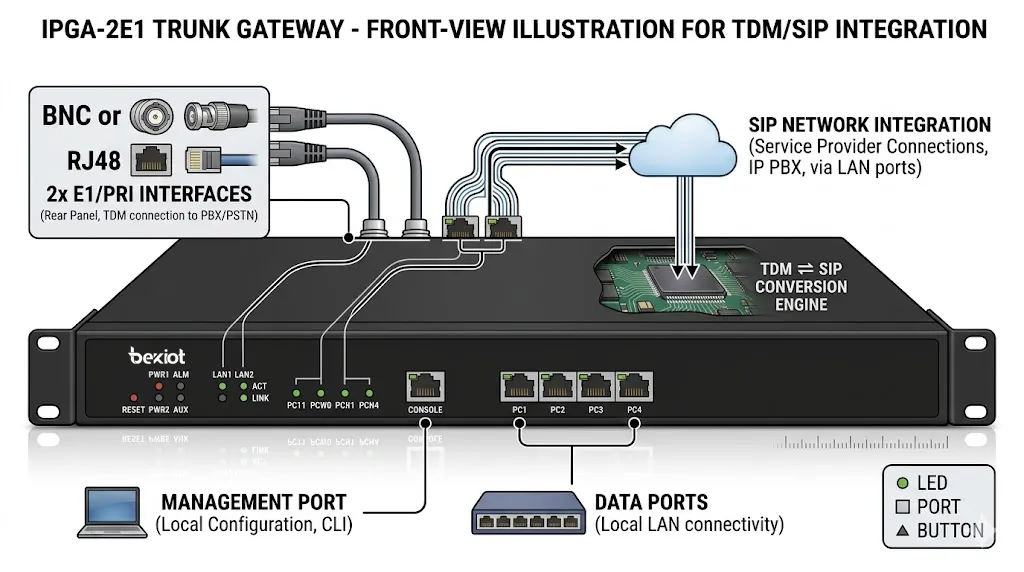
Der IPGA-2E1 ist auf Geschäftsumgebungen ausgelegt, die mehr Digitaltrunk-Kapazität erfordern als Einsteigerlösungen. Mit 2E1-Zugang ist er eine praktische Wahl für Organisationen, die eine stabilere Trunk-Verfügbarkeit für die tägliche Kommunikation, Arbeitsabläufe im Kundenservice, die abteilungsübergreifende Zusammenarbeit und den Ausbau unternehmensweiter Sprachsysteme wünschen. Diese zusätzliche Kapazität macht ihn besser geeignet für Installationen, bei denen eine stabile gleichzeitige Anrufbehandlung und eine zuverlässige Trunk-Nutzung für die Betriebskontinuität entscheidend sind.
Im Vergleich zu Gateway-Konfigurationen mit geringerer Kapazität bietet eine 2E1-Plattform mehr Raum für Wachstum und unterstützt kommunikationsintensive Umgebungen besser. Unabhängig davon, ob das Projekt eine Filialerweiterung, ein größeres Office-Sprachsystem oder dienstleistungsbezogene Anrufaktivitäten umfasst, bietet der IPGA-2E1 eine stabilere Grundlage für den professionellen Einsatz.
Dieses Gateway bildet eine solide Brücke zwischen bestehenden Digitaltrunk-Ressourcen und modernen SIP-basierten Kommunikationsplattformen. Es hilft Unternehmen, wertvolle Sprachinfrastruktur weiter zu nutzen, während sie eine zentralere Steuerung, flexible Routenwahlrichtlinien und eine einfachere Integration mit IP-basierten Systemen einführen. Anstatt eine störende Migration zu erzwingen, unterstützt er einen kontrollierteren und kostengünstigeren Übergangsweg.
Für viele Organisationen geht es bei der Modernisierung der Sprachkommunikation nicht nur um den Austausch von Hardware. Es geht auch darum, die Verwaltbarkeit zu verbessern, zukünftige Erweiterungen zu unterstützen und Legacy-Anbindungen an neuere Unternehmenskommunikationsstrategien anzupassen. Der IPGA-2E1 unterstützt dieses Ziel, indem er eine zuverlässige Interworking-Schicht zwischen traditionellem Telekommunikationszugang und SIP-Umgebungen schafft.
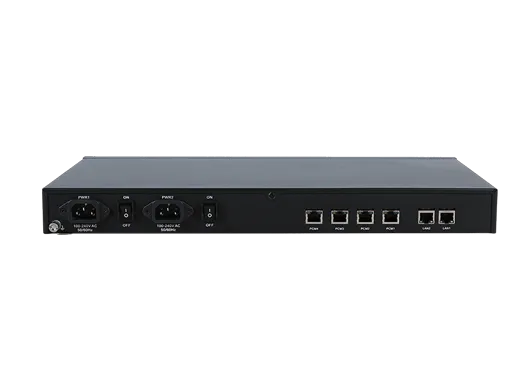
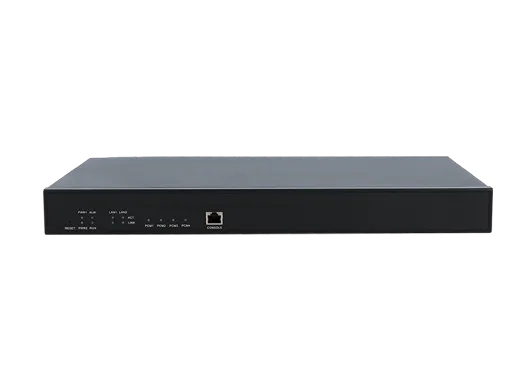
Mit seiner Rackmount-Bauform, einem eingebetteten Betriebssystem und einer für stabilen Betrieb ausgelegten Hardwareplattform eignet sich der IPGA-2E1 für Kunden, die ein professionelles Trunk-Gateway für den kontinuierlichen Geschäftsbetrieb benötigen – und kein einfaches Verbindungselement. Seine Produktausrichtung ist klar auf Unternehmens- und Integratorprojekte ausgerichtet, bei denen Einsatzstabilität und langfristiger Servicemehrwert zählen.
Dadurch ist er eine geeignete Option für Serverräume, Kommunikationsschränke und strukturierte Unternehmens-IT-Umgebungen, in denen ein zuverlässiger Betrieb und eine standardisierte Installation erwartet werden. Für Kunden, die eine langfristige Sprachplattform aufbauen, bietet das Gateway ein professionelleres Einsatzprofil als einfache Konvertergeräte.
Die Stärke eines 2E1-Trunk-Gateways liegt nicht nur in der Kapazität, sondern darin, wie effektiv es die stabile unternehmensweite Anbindung, flexible Routenwahl und die langfristige Weiterentwicklung von Sprachsystemen unterstützt.
Der IPGA-2E1 unterstützt die Anrufweiterleitung zwischen traditionellen Trunk-Netzen und IP-Plattformen, sodass Organisationen Anrufe entsprechend ihrer eigenen Betriebsstruktur lenken können. Er unterstützt zudem die Nummernmanipulation, darunter das Löschen von Ziffern sowie das Hinzufügen von Präfixen oder Suffixen – dies hilft, Unternehmensnummerierungspläne, Filialwählregeln und Betreiberanforderungen effizienter abzugleichen.
Dies ist besonders nützlich in Projekten, bei denen mehrere Standorte, interne Nebenstellenpläne oder gemischte Strategien für ein- und ausgehende Anrufe koordiniert werden müssen. Durch die Unterstützung anpassbarer Nummernverarbeitung und Routenabgleich verringert das Gateway Integrationshindernisse und verbessert die Einsatzflexibilität in verschiedenen Geschäftsszenarien.
Das Gateway unterstützt SIP V1.0 und V2.0 nach RFC3261 sowie Digitaltrunk-Signalisierungsoptionen wie SS7-bezogene Signalisierung, ISDN-Modi für Teilnehmer- und Netzseite sowie die Unterstützung von SS1-Signalisierung. Dadurch lässt es sich einfacher in Umgebungen einsetzen, in denen Legacy-Telekommunikationssysteme und moderne SIP-Plattformen ohne unnötige Komplexität zusammenarbeiten müssen.
Kompatibilität ist ein zentraler Faktor bei der Gateway-Auswahl in der Praxis. Unternehmen und Systemintegratoren benötigen häufig ein Produkt, das sich an unterschiedliche Netzbedingungen, Telekommunikationsumgebungen und PBX-Architekturen anpassen lässt. Der IPGA-2E1 erfüllt dieses Bedürfnis mit einer breiteren Interoperabilitätsgrundlage und hilft, Kompatibilitätsrisiken bei der Implementierung und zukünftigen Erweiterungen zu verringern.
Die Plattform unterstützt gängige Codecs wie G.711A, G.711U, G.729, G.722, G.723, iLBC, AMR-NB, SILK und OPUS. Sie unterstützt zudem mehrere DTMF-Verarbeitungsverfahren und die Echokompensation, wodurch die Medienkompatibilität und Anrufqualität zwischen verschiedenen Sprachsystemen verbessert wird. Diese Funktionen sind wichtig in Projekten, bei denen SIP-Geräte, PBX-Plattformen und Telekommunikationsnetze nicht alle dieselben Medienparameter verwenden.
Durch die breitere Unterstützung von Codecs und praktische Medienverarbeitungsfunktionen eignet sich der IPGA-2E1 besser für heterogene Sprachumgebungen. Dies ist wertvoll für Unternehmen, die eine gleichmäßigere Kommunikationsqualität in internen Systemen, bei leitungsseitigen Anbindungen und in verteilten Unternehmensnetzen wünschen.
Der IPGA-2E1 unterstützt die webbasierte Konfiguration und Software-Upgrades über die Browseroberfläche. Dadurch werden Implementierung und Wartung für Integratoren, Serviceteams und Unternehmens-IT-Abteilungen effizienter, die einfache Verwaltungswerkzeuge bevorzugen. Ein browserbasierter Ansatz kann die Einrichtungskomplexität verringern und die Zeit verkürzen, die für routinemäßige Anpassungen oder Dienständerungen benötigt wird.
Für Organisationen, die mehrere Kommunikationsgeräte verwalten, ist die einfache Konfiguration mehr als nur ein Komfortfaktor. Sie beeinflusst direkt die Projekteffizienz, Wartungskosten und Service-Reaktionsfähigkeit. Der IPGA-2E1 wurde entwickelt, um technischen Teams einen einfacheren Betriebsablauf zu ermöglichen.
Das Gateway umfasst webbasierte Testfunktionen für Ping und Tracert, wodurch Netzwerkprobleme bei der Einrichtung und im Betrieb einfacher identifiziert werden können. Die Unterstützung von Syslog für Fehler-, Warn- und Informationsmeldungen verbessert zudem die Transparenz des Systemstatus und vereinfacht die Fehlerbehebung. Diese Funktionen sind sowohl bei der ersten Implementierung als auch bei der langfristigen Wartung hilfreich.
Diagnosetransparenz ist besonders wichtig in Unternehmenskommunikationsumgebungen, in denen Dienstunterbrechungen Kundenkontakt, Filialzusammenarbeit oder interne Geschäftsprozesse beeinträchtigen können. Mit praktischen Netzwerktests und Protokollierungsfunktionen hilft der IPGA-2E1 technischen Teams, Probleme schneller zu lokalisieren und eine bessere Betriebskontinuität zu gewährleisten.
Die Unterstützung gängiger Netzwerkprotokolle und IP-Konfigurationsfunktionen hilft dem IPGA-2E1, sich natürlicher in strukturierte Geschäftsnetze einzufügen. Dadurch eignet er sich besser für unternehmensweite Einsätze, die einen vorhersehbaren Betrieb, eine einfachere Integration in bestehende IT-Infrastruktur und eine bessere Abstimmung mit zentralen Kommunikationsrichtlinien erfordern.
In realen Implementierungsprojekten muss ein Gateway mehr als nur Schnittstellen umwandeln. Es muss reibungslos in einem breiteren IT- und Sprach-Ökosystem funktionieren. Der IPGA-2E1 ist darauf ausgelegt, diese Rolle zu unterstützen, indem er die praktische Netzwerkkompatibilität bietet, die Unternehmenskommunikationsprojekte häufig erfordern.
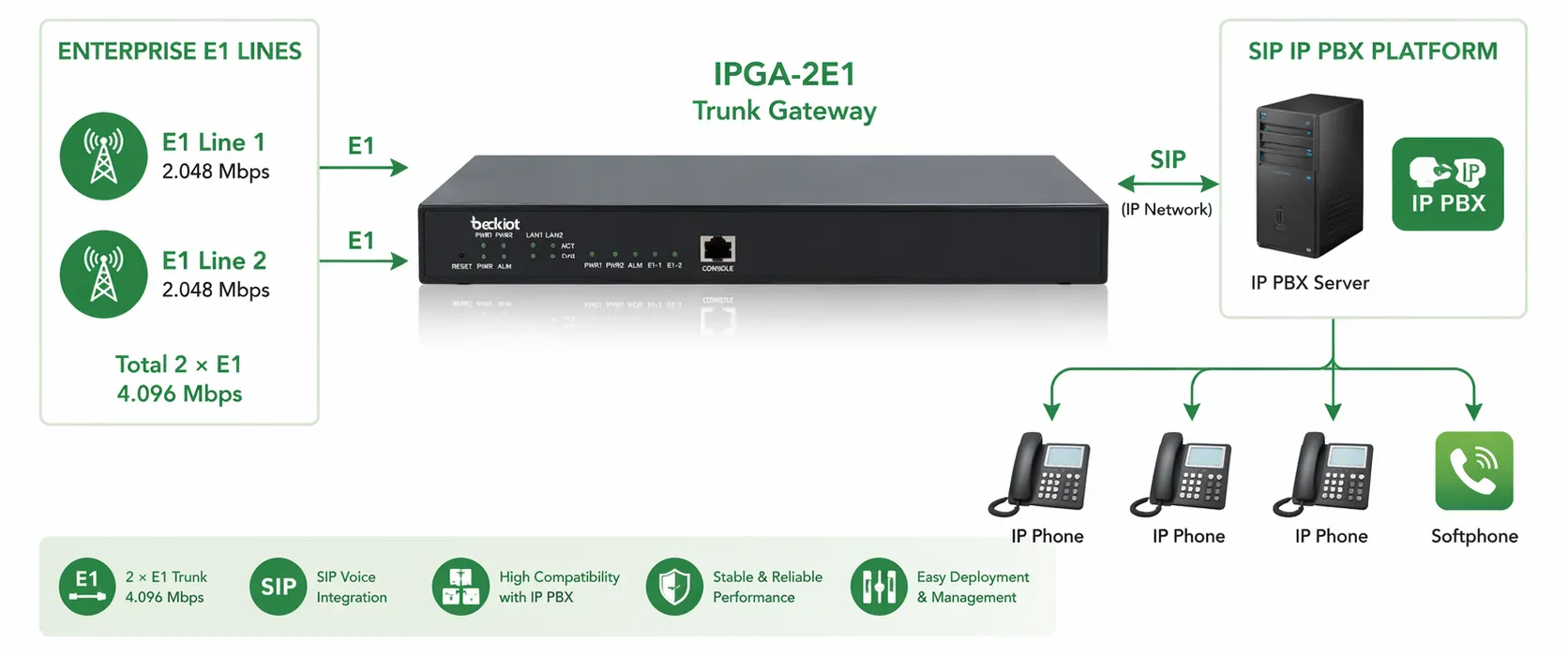
Der IPGA-2E1 eignet sich hervorragend für Unternehmen, die Digitaltrunk-Ressourcen in eine IP-PBX-Umgebung einbinden müssen. Er unterstützt eine einheitlichere Spracharchitektur, indem er traditionelle Telekommunikationszugänge mit SIP-basierter Anrufsteuerung verbindet. Dadurch können Unternehmen bestehende Trunk-Ressourcen behalten und gleichzeitig die Flexibilität und Verwaltbarkeit ihrer Kommunikationsplattform verbessern.
Er ist besonders geeignet für Projekte, bei denen Organisationen Sprachdienste zentralisieren, die Anrufweiterleitung standardisieren oder die Anbindung zwischen Legacy-Telekommunikationszugang und neueren SIP-Systemen stärken möchten.
Für Organisationen mit häufigem ein- und ausgehendem Anrufverkehr bietet das Gateway die Trunk-Kapazität und Flexibilität bei der Routenwahl, die für anspruchsvollere Sprachlasten benötigt werden. Dadurch eignet es sich für Kundenservicecenter, Supportdesks, Kontaktteams und andere kommunikationsintensive Geschäftsumgebungen, in denen eine zuverlässige Trunk-Leistung entscheidend ist.
In diesen Szenarien beeinflusst die stabile Interoperabilität zwischen Telekommunikationsseite und IP-PBX-Seite direkt die Betriebskontinuität und die Effizienz der Anrufbehandlung. Der IPGA-2E1 erfüllt diese praktischen Betriebsanforderungen hervorragend.
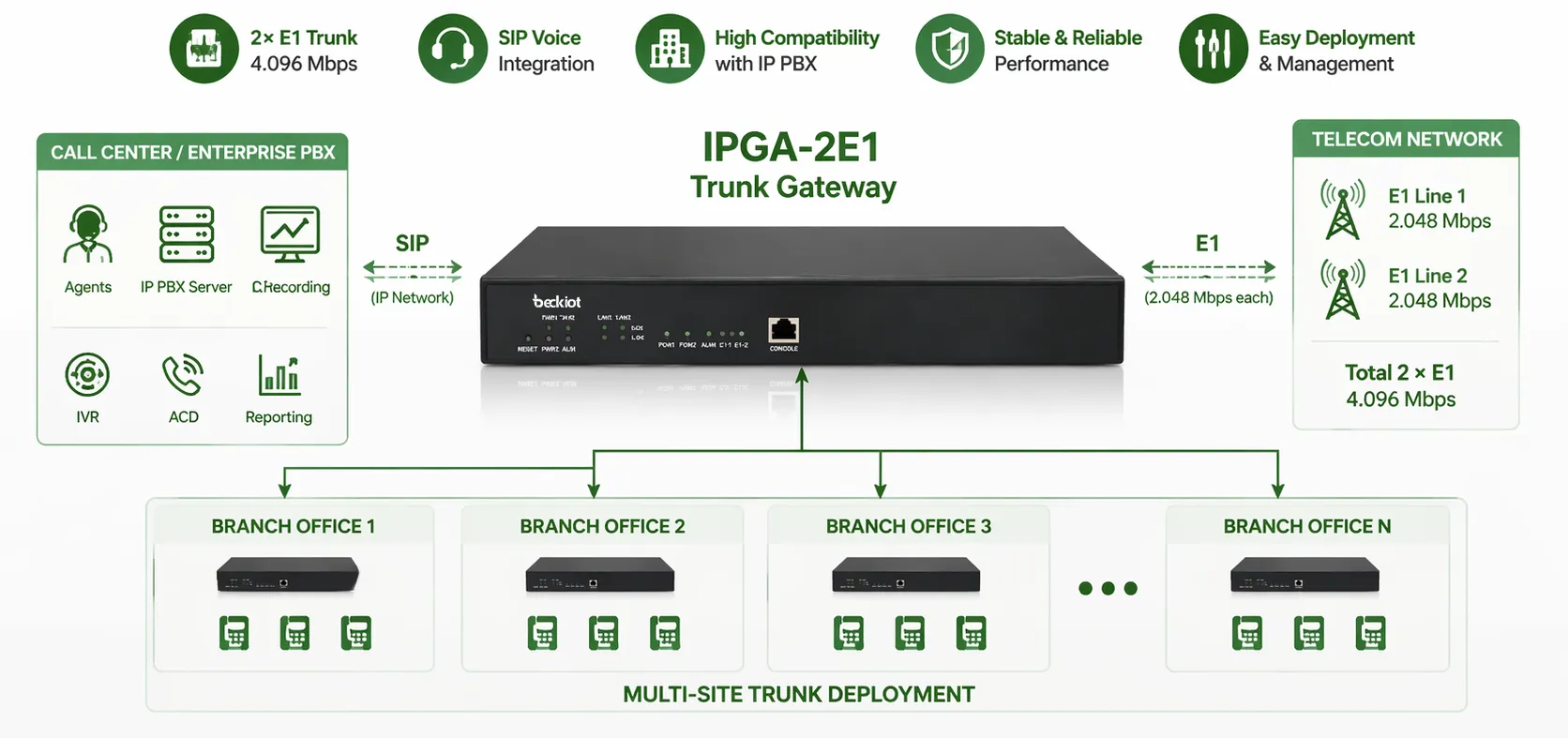
In verteilten Organisationen kann der IPGA-2E1 dazu verwendet werden, Digitaltrunk-Zugänge in ein breiteres unternehmensweites Sprachnetz einzubinden. Dadurch wird die Konsistenz zwischen Standorten verbessert und gleichzeitig eine zentralere Anrufbehandlung, Steuerung von Routenwahlrichtlinien und Verwaltung von Kommunikationsressourcen unterstützt.
Für Unternehmen mit Hauptzentrale und mehreren Filialen kann eine solche Implementierung die Spracharchitektur vereinfachen und ein einheitlicheres Betriebsmodell unterstützen. Sie ist zudem nützlich in Projekten, bei denen verschiedene Standorte koordinierte Kommunikationsfunktionen über eine gemeinsame IP-Plattform aufrechterhalten müssen.
Das Gateway ist zudem eine praktische Wahl für Unternehmen, die von traditioneller Sprachinfrastruktur auf SIP-basierte Kommunikation umrüsten. Es ermöglicht die weitere Nutzung bestehender E1-Trunk-Ressourcen und ermöglicht gleichzeitig eine flexiblere und modernere Dienstearchitektur. Dadurch kann der Migrationsdruck verringert und frühere Telekommunikationsinvestitionen während des Übergangsprozesses geschützt werden.
Anstatt eine plötzliche Ersetzung etablierter Sprachressourcen zu erfordern, unterstützt der IPGA-2E1 einen stufenweisen Modernisierungsweg. Dies ist häufig eine realistischere und kostenschonendere Strategie für Unternehmen, die auf IP-Kommunikation umstellen.
Der Becke IPGA-2E1 vereint 2E1-Trunk-Zugang, SIP-Interoperabilität, flexible Routenwahl, Nummernmanipulation, breite Codec-Unterstützung und browserbasierte Verwaltung in einer einzigen professionellen Plattform. Für Käufer, die ein zuverlässiges und skalierbares Digitaltrunk-Gateway für die Unternehmenskommunikation benötigen, bietet er eine praktische Balance aus Einsatzwert, Betriebsstabilität und langfristigem Integrationspotenzial.
Unabhängig davon, ob das Ziel darin besteht, unternehmensweite E1-Leitungen an eine IP-PBX anzubinden, die Anrufkapazität für Dienstleistungen zu erweitern, filialbezogene Anbindungen zu unterstützen oder eine traditionelle Telekommunikationsumgebung zu modernisieren – der IPGA-2E1 bietet eine einsatzorientierte Lösung mit klaren Geschäftsvorteilen. Er ist nicht nur dazu gedacht, Netze zu verbinden, sondern Unternehmen dabei zu unterstützen, eine besser verwaltbare und zukunftsfeste Sprachinfrastruktur aufzubauen.
Seine Hauptrolle besteht darin, 2E1-Digitaltrunk-Ressourcen mit SIP-basierten Kommunikationsplattformen zu verbinden und die unternehmensweite Sprachanbindung flexibler, skalierbarer und besser verwaltbar zu machen.
Er eignet sich am besten für unternehmensweite IP-PBX-Implementierungen, Callcenter, Kundenserviceumgebungen, filialbezogene Kommunikationsprojekte und Organisationen, die traditionelle Sprachnetze modernisieren.
Ja. Er unterstützt SIP V1.0 und V2.0 nach RFC3261 und eignet sich daher für den Einsatz mit SIP-basierten IP-Telefonieplattformen und unternehmensweiten Sprachsystemen.
Ja. Das Gateway unterstützt die Routenwahl zwischen Digitaltrunk-Netzen und IP-Netzen sowie die Nummernmanipulation wie das Löschen von Ziffern und das Hinzufügen von Präfixen oder Suffixen.
Er unterstützt SS7-bezogene Signalisierung, ISDN-Modi für Teilnehmer- und Netzseite, SS1-Signalisierung und SIP-Signalisierung für den flexiblen Einsatz in gemischten Netzumgebungen.
Ja. Er unterstützt die webbasierte Verwaltung, browserbasierte Software-Upgrades, Ping- und Tracert-Tests sowie Syslog-Ausgaben für eine einfachere Wartung, Überwachung und Diagnose.
Die Unterstützung mehrerer Codecs, verschiedener DTMF-Modi und die Echokompensation helfen, die Kompatibilität und Anrufqualität zwischen verschiedenen Telekommunikations- und IP-Sprachsystemen zu verbessern.
Der IPGA-2E1 eignet sich besser für Umgebungen mit höherem Verkehrsbedarf, größeren Anforderungen an die Trunk-Kapazität und einem größeren Bedarf an stabiler unternehmensweiter Sprachanbindung – insbesondere in Szenarien für Callcenter, unternehmensweite PBXs und standortübergreifende Implementierungen.
| Element | Spezifikation |
|---|---|
| Sprachschnittstelle | E1/T1-Schnittstelle, 1/2/4/8×RJ45-Ports |
| Ethernet-Schnittstelle | 2×10/100/1000Mbps RJ45-Ports (10/100/1000 BASE-TX) |
| Unterstützte Protokolle | SIP V1.0/2.0 (RFC3261), SS7 (TUP, ISUP), ISDN (Teilnehmerseite, Netzseite), SS1 |
| Audiocodecs | G.711A (64 kbps), G.711U (64 kbps), G.729A/B (8 kbps), G.723 (5.3/6.3 kbps), G.722 (64 kbps), AMR-NB (4.75/5.15/5.90/6.70/7.40/7.95/10.20/12.20 kbps), iLBC (13.3/15.2 kbps), SILK (16K/8K, 20 kbps), OPUS (16K/8K, 20 kbps) |
| Blitzschutz | Klasse 4 |
| Produktabmessungen | 440×44×267 mm (L×H×T) |
| Betriebstemperatur | 0°C ~ 40°C |
| Lagertemperatur | -20°C ~ 85°C |
| Betriebsfeuchtigkeit | 8% ~ 90% nicht kondensierend |
| Lagerfeuchtigkeit | 8% ~ 90% nicht kondensierend |
| Serielle Schnittstelle | 1×RS-232-Port (RJ45), Baudrate:115200bps, Datenbits:8 Bit, Stoppbits:1 Bit, Parität:keine, Flusskontrolle:keine |
| Stromversorgung | Eingangsspannung:100~240V AC, maximale Leistungsaufnahme:≤12W |
| Ethernet-Funktionen | Auto-Negotiation unterstützt, Auto MDI/MDIX unterstützt |
| Abtastrate | 8kHz |