

Beim ersten Lesen des PJSIP-Quellcodes fragen sich viele Entwickler, warum eine einfache SIP-INVITE-Anfrage so viele Dateien, Module, Callbacks und Zustandsmaschinen durchläuft.
Die Antwort liegt in der Schichtenarchitektur. PJSIP wandelt Transport, Speicher und Ereignisse in Objekte wie Accounts, Calls, Dialoge, Mediensitzungen und Endpoints um.
Becke Telcom kann dieses Modell in SIP-Plattformen, Dispatch-Systemen, RoIP-Gateways, Industrietelefonen, Notfall-Intercoms und Unified Communication nutzen.
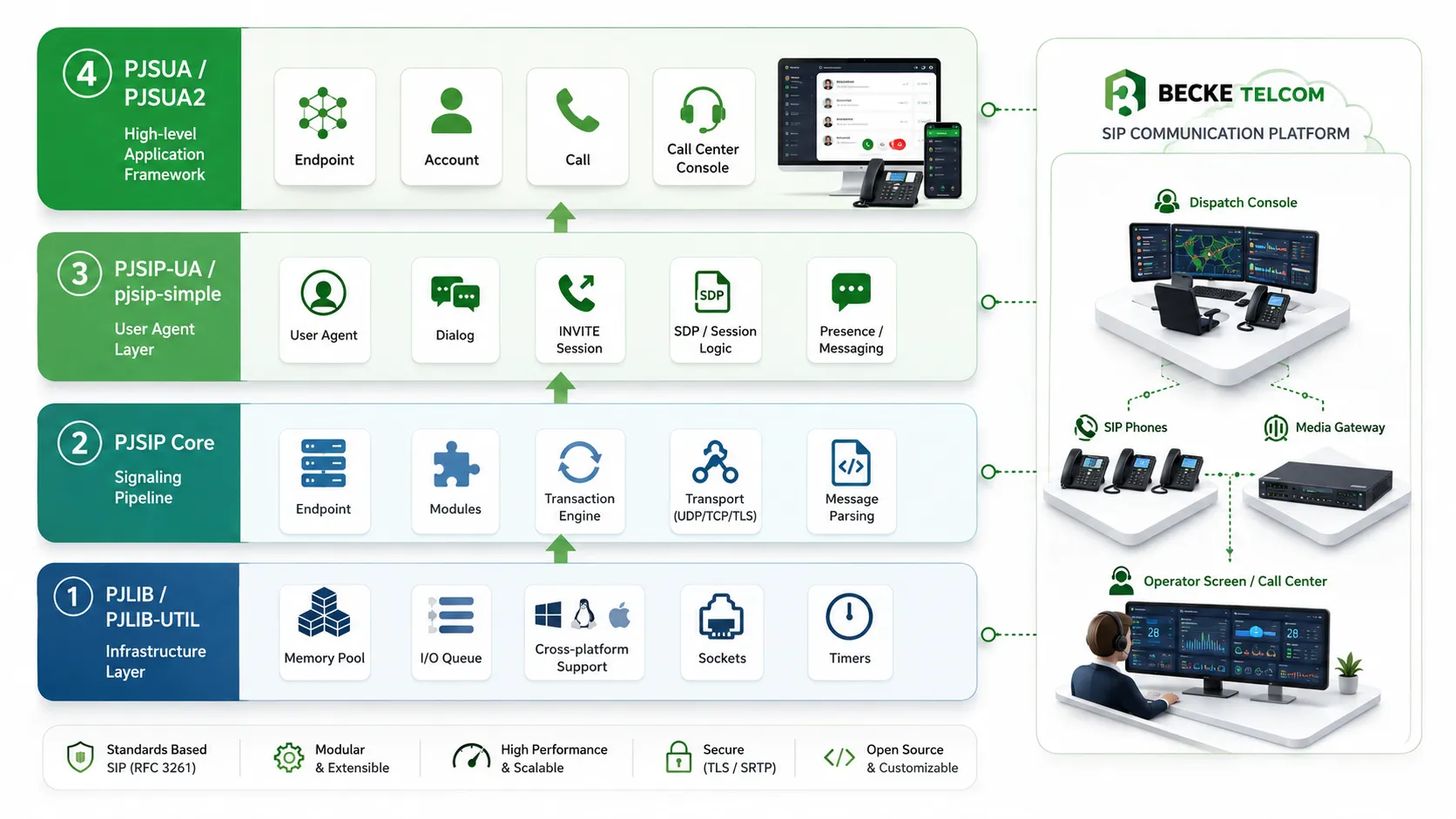
PJSIP als geschichtetes Logistiksystem
Una forma útil de entender PJSIP es compararlo con una logística. El usuario solo quiere iniciar una llamada, pero detrás existen rutas, reglas, documentos, centros de clasificación y servicios.
Cada capa oculta complejidad y expone una interfaz más práctica. Por eso un INVITE atraviesa varios componentes con responsabilidades separadas.
| Capa PJSIP | Analogía logística | Rol de ingeniería |
|---|---|---|
| PJLIB | Carreteras y camiones | Memoria, hilos, sockets, temporizadores e infraestructura multiplataforma. |
| PJSIP Core | Reglas y documentos | Analiza, enruta, envía y recibe mensajes SIP según RFC 3261. |
| PJSIP-UA | Centro de clasificación | Convierte mensajes SIP en diálogos, sesiones y comportamiento user-agent. |
| PJSUA / PJSUA2 | Mostrador de aplicación | API de alto nivel para cuentas, llamadas, medios, registro y lógica. |
PJLIB und PJLIB-UTIL: Infrastrukturschicht
PJLIB y PJLIB-UTIL resuelven los problemas de base: memoria, compatibilidad, sockets, temporizadores, eventos, hilos, logs y utilidades.
RFC 3261 define SIP, pero no cómo un programa C administra memoria o concurrencia. PJLIB permite que las capas superiores se centren en señalización y medios.
Speicherabstraktion: pj_pool_t
El análisis SIP crea cadenas, cabeceras, URI y estructuras temporales. Con malloc/free frecuentes puede aparecer fragmentación.
pj_pool_t asigna memoria por ciclo de vida y permite liberar un pool completo cuando termina una transacción, diálogo o contexto.
I/O-Abstraktion: pj_ioqueue
Los sistemas SIP usan UDP, TCP y TLS. Linux, Windows y macOS tienen modelos distintos como epoll, IOCP y kqueue.
pj_ioqueue oculta esas diferencias para que una aplicación PJSIP sea portable.
PJLIB resuelve el problema de funcionar con fiabilidad: memoria, concurrencia, temporizadores, sockets y eventos.
PJSIP Core: Signalisierungsschicht
PJSIP Core es el centro de la señalización. No define la lógica de negocio, sino una canalización estándar y extensible de mensajes SIP.
Gestiona análisis, creación de mensajes, transporte, endpoint, módulos, transacciones y rutas.
Endpoint und Module
pjsip_endpoint es el punto central por el que pasan los mensajes. Los pjsip_module separan transacciones, eventos, user-agent y aplicación.
Los paquetes entrantes se convierten en pjsip_rx_data y pasan por parsing, transporte, transacción, UA y callbacks.
Zwiebelmodell der SIP-Verarbeitung
Cada módulo puede inspeccionar o modificar mensajes sin reescribir el núcleo. Esto permite autenticación, logging, routing, seguridad, reescritura y grabación.
Un dispatch SIP puede interceptar INVITE, comprobar identidad, aplicar rutas y enviar llamadas a agentes, teléfonos SIP o estaciones de emergencia.
Transaktion: pjsip_tsx
En SIP, una solicitud y sus respuestas forman una transacción con temporizadores como Timer A, Timer B y Timer D.
pjsip_tsx lo convierte en una máquina de estados y el desarrollador escucha on_tsx_state.
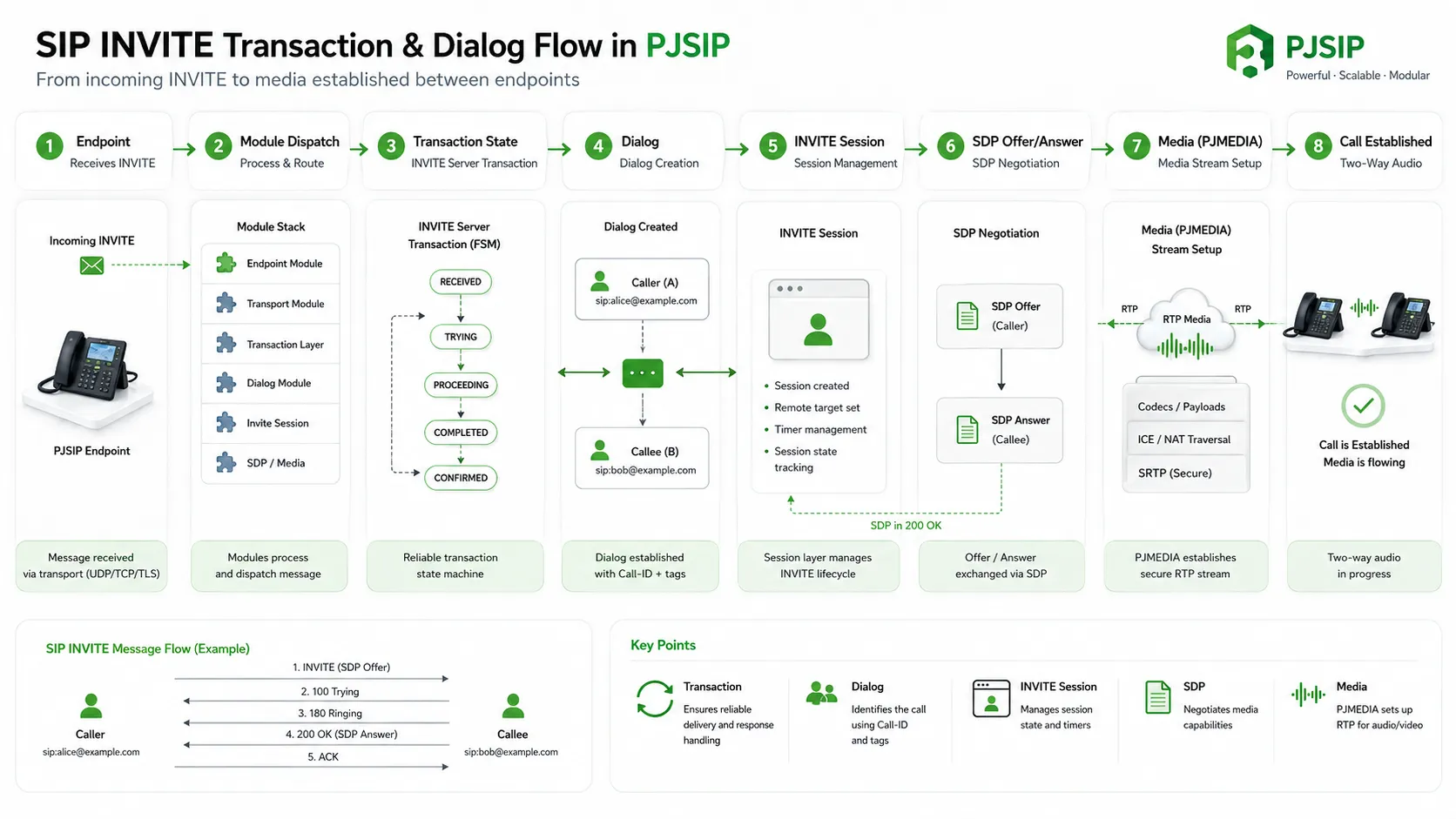
PJSIP-UA: von Nachrichten zu Sitzungen
RFC 3261 habla de mensajes y cabeceras, pero un agente piensa en responder, poner en espera, transferir y colgar.
PJSIP-UA convierte mensajes SIP en objetos como diálogos y sesiones invite.
Dialog: pjsip_dlg
SIP identifica diálogos con Call-ID, From tag y To tag.
pjsip_dlg mantiene CSeq, rutas, correspondencia, respuestas y estado.
INVITE-Sitzung: pjsip_inv_session
Una llamada SIP puede incluir INVITE, 100 Trying, 180 Ringing, 183 Session Progress, 200 OK, ACK, PRACK, UPDATE, re-INVITE y BYE.
pjsip_inv_session une esas transacciones e introduce SDP para coordinar con PJMEDIA, RTP, codecs y audio.
pjsip-simple: Präsenz, Nachrichten und Events
En UC, la voz es solo una parte. También se necesitan presencia, mensajes, suscripciones, notificaciones y eventos.
En Becke Telcom, conceptos similares muestran disponibilidad de endpoints, estado de despacho, alarmas y presencia de operadores.
PJSUA und PJSUA2: High-Level-Frameworks
La mayoría de aplicaciones no necesitan usar PJLIB o Core directamente. PJSUA y PJSUA2 ofrecen API prácticas.
PJSUA: C-API
PJSUA encapsula cuentas, llamadas, registros, medios y audio. pjsua_call_make_call() crea INVITE, diálogo, SDP, medios y estado.
PJSUA2: objektorientierte C++-API
Endpoint, Account y Call permiten desarrollar softphones, clientes de call center y consolas sin escribir SIP bruto.
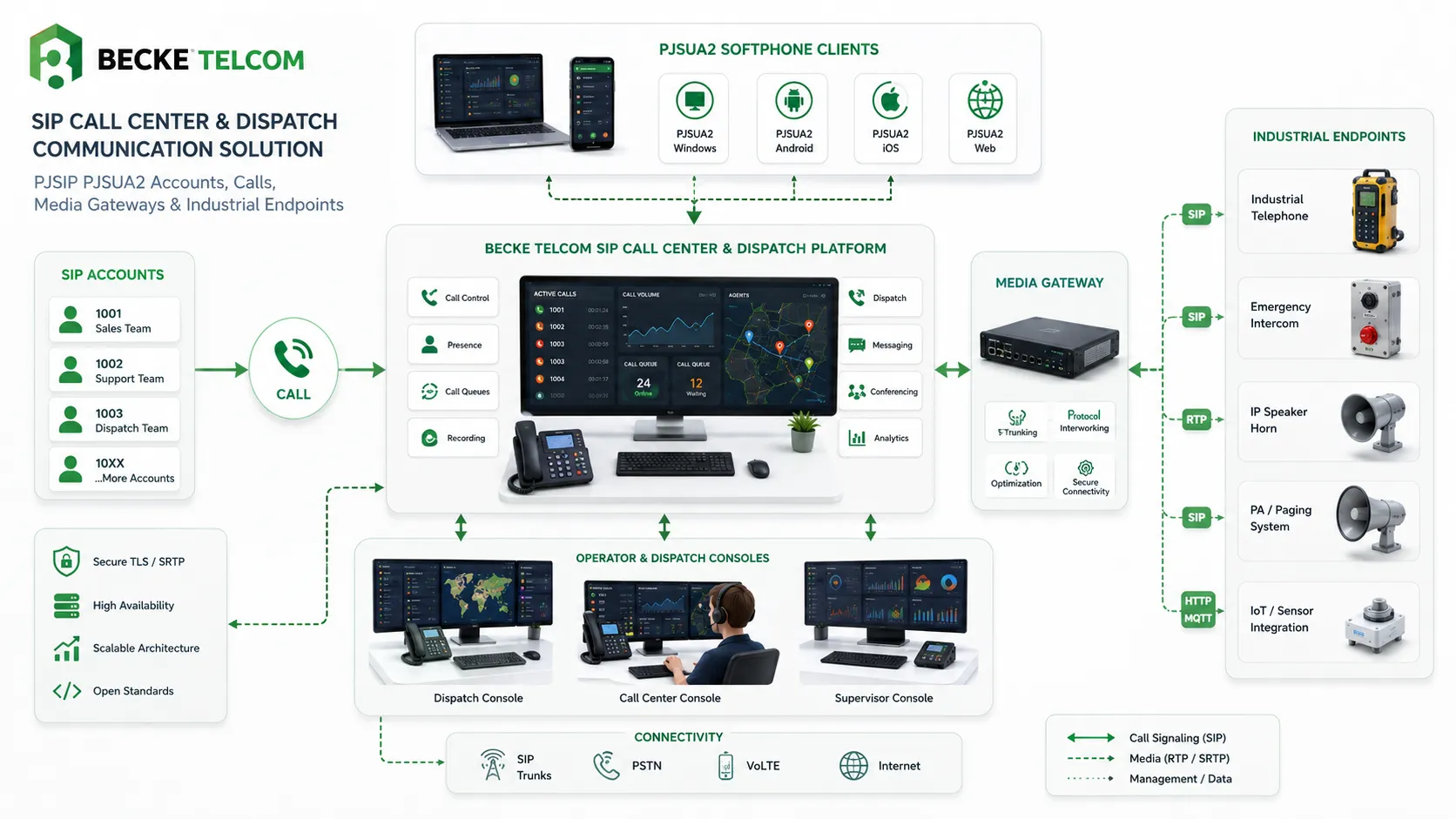
Wie PJSIP Callcenter und Dispatch unterstützt
Un call center gestiona registro, llamadas entrantes y salientes, timbre, respuesta, espera, transferencia, conferencia, grabación, rutas, medios y estados.
PJSIP permite crear endpoints con PJSUA2 y servidores avanzados con módulos de bajo nivel, políticas, gateways e integración externa.
Registrierung und Authentifizierung
Cada agente o dispositivo SIP suele necesitar una cuenta. PJSUA2 encapsula registro, autenticación y estado.
Call-Control
Las llamadas son objetos con estados como calling, ringing, confirmed, disconnected o held.
Medien und SDP
La voz se negocia por SDP y se transmite por RTP. PJSIP y PJMEDIA gestionan codecs, audio, puertos y streams.
Gateways und industrielle Endpunkte
Las soluciones Becke Telcom pueden integrar teléfonos SIP, teléfonos industriales, estaciones de emergencia, RoIP, paging, broadcast y consolas.
Technische Becke Telcom Perspektive
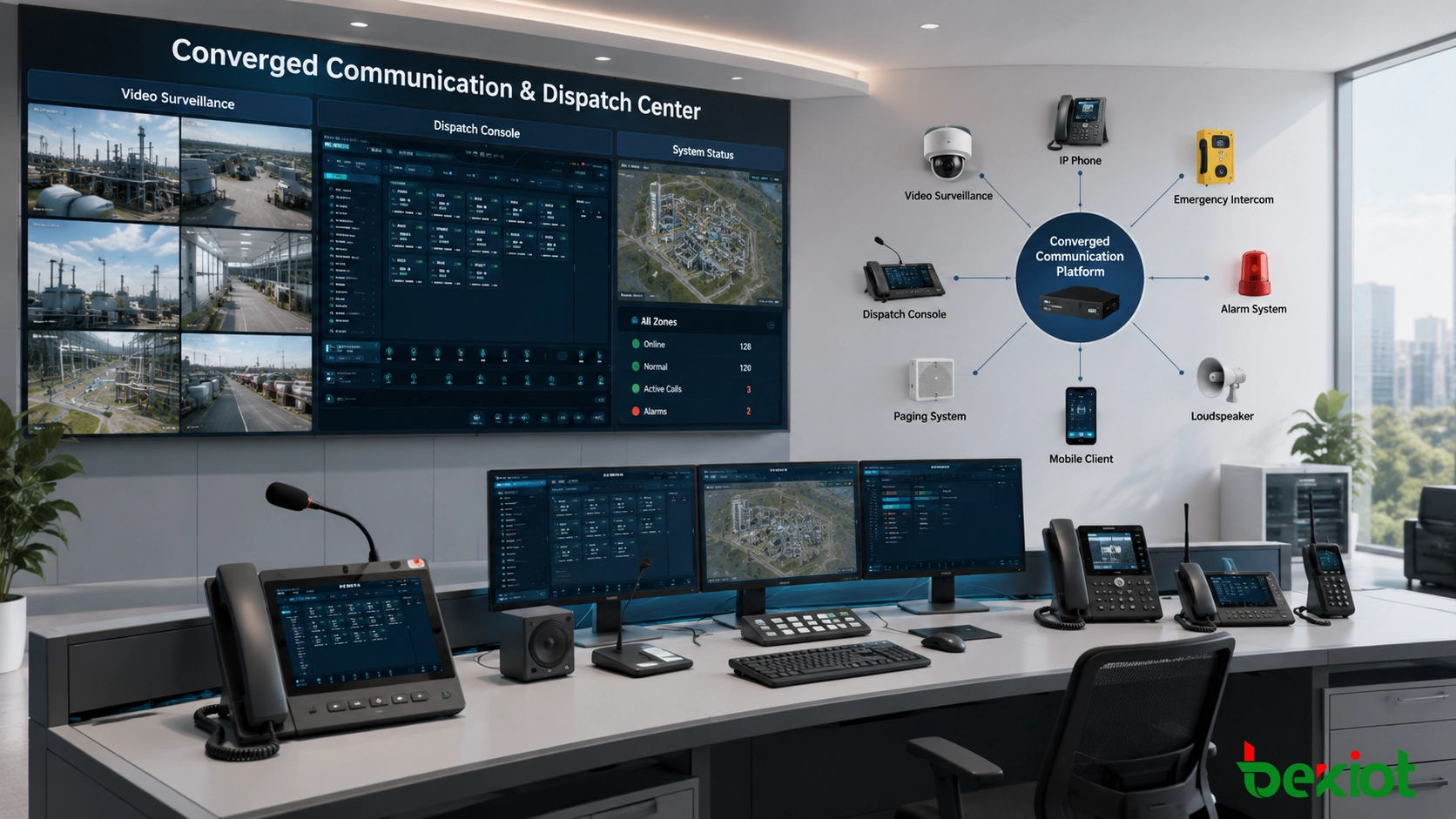
Un centro de control puede requerir SIP trunk, IP PBX, teléfonos industriales, intercoms, gateway de radio, PA, CCTV y despacho.
La arquitectura fiable separa transporte, recursos, señalización SIP, diálogo, sesión y workflow de negocio.
PJSIP es potente porque separa la complejidad del protocolo del desarrollo de negocio.
Warum PJSIP so viele Schichten nutzt
Las capas resuelven la complejidad de RFC 3261: PJLIB ejecuta, PJSIP Core procesa mensajes, PJSIP-UA gestiona sesiones, y PJSUA and PJSUA2 acelera aplicaciones.
Por eso sirve para embedded, IoT, softphones, vídeo, conferencia, despacho y call centers.
Wert für Entwickler
Bessere Wartbarkeit
Los problemas se localizan por capa: memoria, retransmisión, estado de llamada o negocio.
Bessere Skalierbarkeit
Los módulos agregan autenticación, rutas, logs, monitoreo, grabación y seguridad sin reescribir el stack.
Bessere Wiederverwendung
La misma base SIP puede servir teléfonos, agentes, consolas, gateways y endpoints industriales.
Fazit
PJSIP parece complejo porque un INVITE atraviesa muchas capas, pero esta complejidad es intencional.
Para Becke Telcom, el modelo muestra que una buena plataforma separa transporte, señalización, sesión, medios y lógica de negocio.
FAQ
Warum läuft ein INVITE durch so viele Dateien?
Porque PJSIP separa transporte, parsing, endpoint, transacción, diálogo, sesión, SDP y callbacks.
Welche Rolle hat PJLIB?
Proporciona memoria, sockets, temporizadores, eventos, hilos, logs y abstracción multiplataforma.
Was ist der Unterschied zwischen Core und UA?
Core procesa mensajes y transacciones; UA gestiona diálogos, sesiones y ciclo de llamada.
Wofür ist PJSUA2 gedacht?
Para desarrollar softphones, clientes de call center, despacho y herramientas SIP en C++.
Wie hilft das Becke Telcom?
Ofrece un modelo para SIP call center, despacho, RoIP, teléfonos industriales y comunicación unificada.