

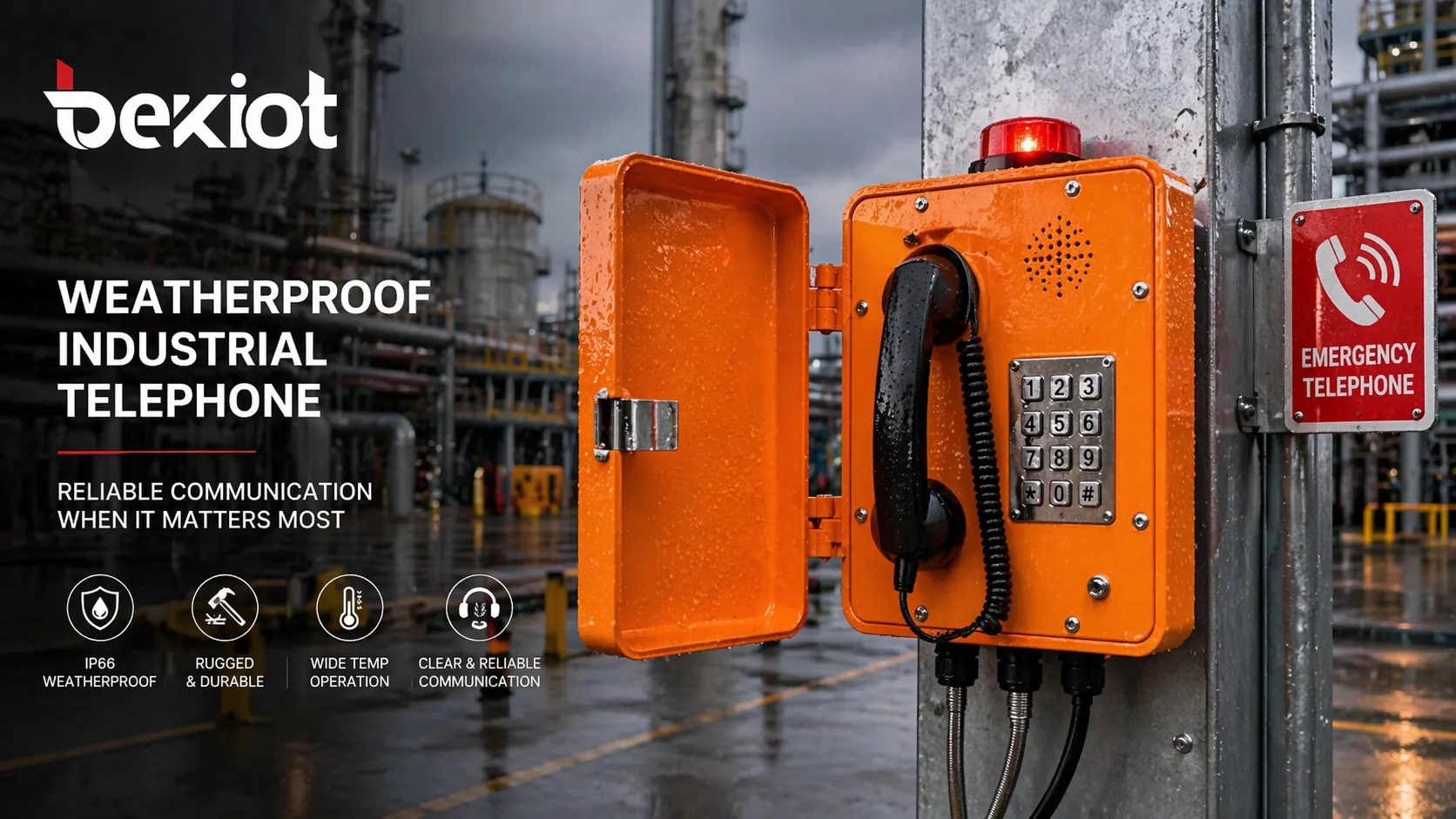
A weatherproof industrial telephone is used for reliable voice communication in outdoor, harsh, dusty, wet, noisy, and mission-critical environments. Unlike a normal office phone, an industrial telephone is designed to keep working when exposed to rain, wind, humidity, dust, vibration, temperature changes, corrosive air, and heavy daily use. It is commonly installed in factories, tunnels, mines, ports, railways, power plants, petrochemical sites, highways, airports, utility tunnels, and other critical facilities where communication must remain available during daily operations and emergencies.
Related Products Overview:BT27 Industrial Weatherproof Telephone
In many industrial sites, workers cannot rely only on mobile phones or ordinary desktop telephones. Signal coverage may be unstable, noise levels may be high, and the environment may be too demanding for consumer-grade devices. A weatherproof industrial phone provides a fixed communication point that can be easily found, quickly operated, and integrated with an IP PBX, SIP server, dispatch system, public address system, or emergency communication platform.

What Is a Weatherproof Industrial Telephone?
A weatherproof industrial telephone is a rugged communication terminal built with a protected enclosure, durable handset, industrial-grade keypad, waterproof structure, and stable voice communication interface. It may support analog telephone lines, SIP, VoIP, IP network communication, hotline calling, emergency calling, loudspeaker output, beacon alarm, paging integration, or dispatch system connection depending on the model.
The key difference between a weatherproof industrial telephone and an ordinary telephone is environmental protection. A standard office phone is mainly designed for clean indoor desks. A rugged industrial telephone is designed for demanding installation areas such as production floors, outdoor platforms, tunnel walls, chemical plants, transportation corridors, and emergency help points.
Typical protection features may include an IP65, IP66, or IP67 waterproof and dustproof rating, a die-cast aluminum housing, stainless steel enclosure, anti-corrosion coating, sealed keypad, armored handset cord, noise-cancelling handset, vandal-resistant structure, and high-visibility color design. These features help the telephone remain functional in places where rain, dust, splashing water, salt mist, oil mist, vibration, and physical impact may occur.
Main Uses of a Weatherproof Industrial Telephone
Emergency Communication
One of the most important uses of a weatherproof industrial telephone is emergency communication. In industrial environments, emergencies may include equipment failure, fire risk, gas leakage, worker injury, traffic accident, tunnel incident, security event, or production interruption. A fixed industrial emergency telephone allows workers to quickly contact the control room, security center, dispatch desk, or emergency response team.
Many weatherproof industrial telephones support one-touch emergency calling or hotline auto-dial. When a worker picks up the handset or presses an emergency button, the phone can automatically call a preset number such as the dispatch center, duty room, control room, or emergency command platform. This reduces operation steps and helps speed up response during urgent situations.
Daily Dispatch Communication
A weatherproof industrial telephone is also used for daily dispatch communication. In factories, mines, tunnels, ports, rail transit systems, and power plants, staff often need stable communication between field locations and control rooms. A fixed industrial phone provides a reliable communication channel for task coordination, equipment checks, security reporting, access control support, and maintenance communication.
When connected to an IP PBX, SIP server, or dispatch system, a SIP industrial telephone or VoIP industrial telephone can become part of a larger communication network. Different departments, zones, workstations, and emergency points can be assigned extension numbers, making site-wide communication easier to manage.
Outdoor Public Safety Communication
Weatherproof industrial telephones are widely used in public safety environments such as highways, bridges, railway platforms, airports, ports, scenic areas, campuses, parking areas, and public service facilities. In these places, users may need a clearly visible and dependable emergency help point when mobile phones are unavailable, damaged, out of power, or difficult to use.
An outdoor industrial telephone can be installed as a roadside emergency phone, tunnel help phone, platform communication phone, parking lot emergency call station, or public area help point. With a rugged housing and waterproof design, it can remain available in rain, heat, cold, dust, and direct outdoor exposure.
Harsh Industrial Site Communication
Industrial production sites often include noise, vibration, moisture, dust, oil, chemicals, and heavy machinery. A normal phone may fail quickly in these conditions. A heavy-duty industrial telephone is used to provide stable communication in these environments, especially where reliable voice contact is necessary for safety and workflow coordination.
Common installation sites include manufacturing plants, steel plants, cement plants, power stations, wastewater treatment plants, petrochemical facilities, refineries, storage yards, marine terminals, mining areas, and outdoor loading zones. In these environments, a weatherproof industrial telephone helps workers communicate clearly even when conditions are difficult.
Where Are Weatherproof Industrial Telephones Installed?
Tunnels and Utility Tunnels
In road tunnels, railway tunnels, metro tunnels, and utility tunnels, communication points must be easy to find and reliable during emergencies. A tunnel emergency telephone is usually installed along tunnel walls, evacuation passages, equipment rooms, control points, and maintenance areas. It can connect users directly to the tunnel control center or emergency dispatch room.
Weatherproof design is important because tunnel environments may include moisture, dust, vehicle exhaust, vibration, and limited maintenance access. Some tunnel communication systems also connect industrial telephones with PA broadcasting, CCTV, alarm systems, and emergency command platforms.
Factories and Manufacturing Plants
In factories, weatherproof industrial telephones are used on production lines, workshop entrances, equipment platforms, warehouses, loading docks, and maintenance zones. Workers can use them to contact supervisors, maintenance teams, safety officers, or the central control room.
For large manufacturing plants, an industrial telephone system can be integrated with SIP phones, intercoms, paging speakers, broadcast amplifiers, dispatch consoles, and alarm devices. This creates a more complete communication system for daily production and emergency response.
Petrochemical, Oil, and Gas Facilities
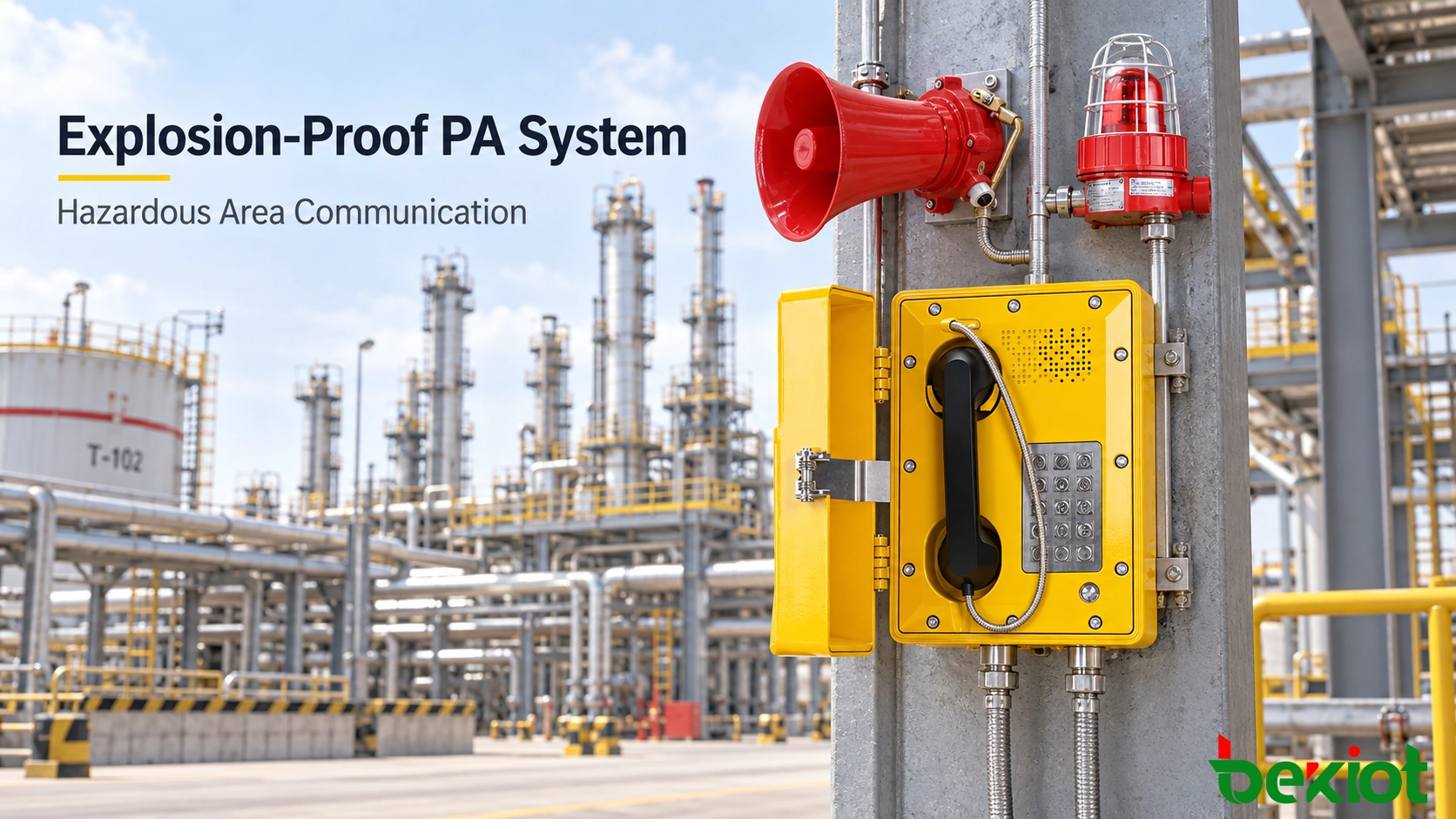
Petrochemical plants, refineries, oil depots, gas stations, offshore platforms, and energy facilities often require specialized communication devices. In areas with hazardous gas or dust risks, a normal weatherproof telephone may not be enough. These sites may require an explosion-proof telephone, explosion-proof call station, or hazardous area telephone designed for classified areas.
A weatherproof industrial telephone may be used in non-hazardous outdoor areas, while an explosion-proof industrial telephone is selected for hazardous zones. Both product types support reliable communication, but explosion-proof models are designed with additional safety structures for hazardous-area use.
Mining and Heavy Industry
Mining sites, quarry areas, metal plants, and heavy industrial facilities require rugged communication devices that can withstand dust, impact, moisture, and rough operation. A waterproof industrial telephone can be installed at underground passages, surface stations, control rooms, conveyor areas, and emergency shelters.
In noisy areas, the telephone may use a high-volume ringer, flashing beacon, loudspeaker, or noise-cancelling handset. These features help users notice incoming calls and maintain clearer communication in high-noise environments.
Ports, Airports, and Transportation Facilities
Ports and airports require fast communication across large outdoor areas. Weatherproof industrial telephones can be installed at gates, berths, loading areas, runways, maintenance zones, baggage areas, security posts, and emergency stations. They help staff coordinate operations and respond quickly when incidents occur.
For transportation facilities, industrial telephones may also work with dispatch systems, radio systems, PA systems, and video surveillance platforms. This helps create a more connected command and communication environment.

Important Features of a Weatherproof Industrial Telephone
Weatherproof and Waterproof Housing
The most important feature is a protected housing. A weatherproof industrial telephone is usually built with a sealed enclosure to resist water, dust, and outdoor weather. Common ratings include IP65, IP66, and IP67. These ratings help indicate the level of dust and water protection.
For outdoor and industrial applications, the enclosure may use die-cast aluminum, stainless steel, or reinforced engineering materials. A strong housing protects the internal electronics and helps extend the service life of the device.
Rugged Handset and Armored Cord
The handset is one of the most frequently used parts of an industrial telephone. A rugged handset should be strong, easy to grip, and suitable for long-term industrial use. Many models use an armored handset cord to reduce damage from pulling, bending, vandalism, or heavy operation.
In high-noise environments, a noise-cancelling handset can improve voice clarity. This is useful in workshops, power plants, tunnels, ports, and heavy machinery areas.
Emergency Button and Hotline Calling
Some weatherproof industrial telephones include an emergency call button, speed dial button, or hotline function. A hotline telephone can automatically call a preset number when the handset is lifted. This is useful for tunnels, highways, industrial plants, public safety points, and unattended sites.
One-touch calling reduces user error and helps people contact the correct department quickly. For emergency communication, simple operation is often more important than complex functions.
Warning Beacon and Loudspeaker
In noisy or outdoor areas, the telephone may include a warning beacon, flashing light, siren, loudspeaker, or external ringer. A telephone with beacon and loudspeaker makes incoming calls easier to notice. It can also support local alarm indication or paging-related functions.
Some industrial telephones can work as an industrial paging telephone or be linked with a PA system. This allows the system to support both point-to-point calling and wider broadcast communication.
SIP, VoIP, and Analog Options
Weatherproof industrial telephones are available in different communication types. An analog industrial telephone connects through a traditional telephone line. A SIP industrial telephone or VoIP industrial telephone connects through an IP network and can register to an IP PBX, SIP server, or unified communication platform.
SIP and VoIP models are useful for modern industrial communication systems because they can support remote management, flexible extension numbering, multi-site networking, call routing, call recording, dispatch integration, and connection with other SIP endpoints such as IP phones, SIP intercoms, SIP speakers, and paging consoles.
How Weatherproof Industrial Telephones Support Emergency Systems
Connection with IP PBX and SIP Server
When connected to an IP PBX or SIP server, a weatherproof industrial telephone becomes part of the site's voice communication network. Each telephone can be assigned an extension number, call group, emergency route, or dispatch priority. This allows control room operators to quickly identify the calling point and respond to the correct location.
For multi-site projects, SIP industrial telephones can be deployed across different buildings, branches, tunnels, substations, or remote stations. The communication system can be managed centrally while still supporting local emergency response.
Integration with Dispatch Communication
Industrial dispatch systems often require clear communication between field workers and control room operators. Weatherproof industrial telephones can be connected to dispatch consoles, command platforms, recording systems, and alarm management software. When an emergency call is made, the dispatch operator can answer, record, transfer, broadcast, or escalate the event.
This is why industrial telephones are often used in command and dispatch communication systems, industrial emergency communication systems, and mission-critical communication systems.
Integration with PA and PAGA Systems
In some industrial facilities, weatherproof industrial telephones work together with PA systems or PAGA systems. A PAGA system is used for public address and general alarm functions, especially in industrial and hazardous environments. When combined with industrial telephones, the system can support emergency calling, zone paging, voice announcement, alarm notification, and evacuation communication.
For example, a worker may use an industrial telephone to contact the control room, while the control room uses SIP speakers, horn speakers, or paging amplifiers to broadcast instructions to a specific zone. This improves communication coverage and emergency response efficiency.
Weatherproof Industrial Telephone vs Ordinary Telephone
An ordinary telephone is usually suitable for offices, reception desks, homes, hotels, and clean indoor spaces. It is not designed to handle rain, dust, vibration, impact, or corrosive environments. A weatherproof industrial telephone is built for harsh conditions and long-term fixed installation.
The main differences include stronger enclosure materials, higher IP protection rating, more durable handset design, louder ringing options, emergency calling functions, and better compatibility with industrial communication systems. In short, a weatherproof industrial telephone is not only a phone. It is a field communication terminal for safety, operation, and emergency response.
Weatherproof Industrial Telephone vs Explosion-Proof Telephone
A weatherproof industrial telephone protects against weather, water, dust, and harsh environmental conditions. An explosion-proof telephone is designed for hazardous areas where flammable gas, vapor, or dust may exist. Both are industrial telephones, but they are selected for different risk levels.
For general outdoor industrial use, a weatherproof industrial telephone may be suitable. For oil and gas, petrochemical, chemical storage, dust explosion risk, or hazardous production areas, an explosion-proof industrial telephone, explosion-proof intercom station, or explosion-proof paging call station may be required according to project standards and site classification.
Common Related Product Terms
Industrial Telephone
Industrial telephone is the general term for rugged telephones used in industrial environments. It can include weatherproof telephones, explosion-proof telephones, wall-mounted telephones, hands-free telephones, SIP telephones, analog telephones, hotline telephones, and emergency telephones.
Industrial Phone
Industrial phone is a shorter and more general phrase. It is often used in product pages, search keywords, and marketing descriptions. It usually refers to the same type of rugged communication device as an industrial telephone.
Waterproof Industrial Telephone
A waterproof industrial telephone emphasizes protection against water, splashing, rain, and wet environments. It is suitable for outdoor sites, tunnels, ports, wastewater plants, and humid industrial locations.
Weatherproof Industrial Telephone
A weatherproof industrial telephone emphasizes broader outdoor resistance, including rain, wind, dust, temperature changes, humidity, and general weather exposure. It is a common choice for outdoor industrial communication and public safety applications.
SIP Industrial Telephone
A SIP industrial telephone uses the SIP protocol and connects to an IP PBX or SIP server over an IP network. It is suitable for modern VoIP communication systems, dispatch platforms, and integrated industrial communication networks.
Industrial Emergency Telephone
An industrial emergency telephone is designed for urgent communication. It may include one-touch calling, hotline auto-dial, emergency button, warning beacon, loudspeaker, and direct connection to the control room or emergency center.

How to Choose a Weatherproof Industrial Telephone
Check the Installation Environment
The first step is to check where the telephone will be installed. Outdoor walls, tunnels, marine areas, mines, petrochemical sites, railway platforms, and factory workshops have different requirements. The site environment determines whether the project needs a weatherproof telephone, waterproof telephone, corrosion-resistant telephone, vandal-resistant telephone, or explosion-proof telephone.
Select the Right Protection Rating
For outdoor and harsh environments, IP65 or IP66 protection is commonly used. If the site involves stronger water exposure or more demanding conditions, a higher protection level may be required. For public areas, IK-level impact resistance may also be important.
Choose SIP, VoIP, or Analog Communication
If the site uses a modern IP communication network, a SIP industrial telephone is usually a flexible choice. It can connect with IP PBX systems, SIP servers, dispatch consoles, and other SIP endpoints. If the site still uses traditional telephone lines, an analog industrial telephone may be suitable.
Consider Emergency and Alarm Functions
For emergency applications, choose a model with one-touch calling, hotline auto-dial, loud ringer, beacon light, loudspeaker, or alarm linkage. These functions help users quickly start communication and help operators notice calls in noisy or high-risk areas.
Consider System Integration
For larger projects, the telephone should not be selected as a standalone device only. It should fit into the complete communication architecture. A good industrial telephone system may include SIP phones, industrial intercoms, emergency call stations, paging speakers, PA amplifiers, PAGA systems, dispatch consoles, video linkage, alarm linkage, and central management software.
Becke Telcom Weatherproof Industrial Telephone Solutions
Becke Telcom provides industrial communication solutions for harsh environments, public safety sites, transportation facilities, petrochemical areas, power plants, tunnels, factories, ports, and critical infrastructure. A Becke Telcom weatherproof industrial telephone can be used as a rugged field communication point for daily operation, emergency calling, dispatch communication, and system integration.
For projects requiring stronger environmental protection, Becke Telcom can support weatherproof industrial telephones, waterproof industrial telephones, SIP industrial telephones, VoIP industrial telephones, explosion-proof telephones, emergency call stations, industrial intercom stations, and paging-related communication devices. These products can be integrated with IP PBX, SIP server, dispatch platform, PA system, PAGA system, and emergency communication architecture.
Whether the application is a tunnel emergency telephone system, factory communication system, hazardous area communication system, public safety communication system, or industrial emergency communication system, the goal is the same: provide stable, clear, and accessible communication when it matters most.
Conclusion
A weatherproof industrial telephone is used for reliable communication in outdoor, harsh, noisy, dusty, wet, and mission-critical environments. It supports emergency calling, daily dispatching, public safety communication, industrial site coordination, and integration with larger voice communication systems.
Compared with ordinary telephones, weatherproof industrial telephones offer stronger protection, more durable construction, clearer operation in harsh environments, and better suitability for industrial emergency communication. For factories, tunnels, mines, ports, airports, power plants, highways, petrochemical sites, and critical facilities, they are an essential part of a dependable communication system.
FAQ
What is a weatherproof industrial telephone used for?
A weatherproof industrial telephone is used for voice communication in outdoor, harsh, wet, dusty, noisy, or industrial environments. It is commonly used for emergency calling, dispatch communication, public safety communication, and field operation support.
Where can a weatherproof industrial telephone be installed?
It can be installed in factories, tunnels, mines, ports, airports, power plants, highways, rail transit systems, outdoor platforms, utility tunnels, petrochemical facilities, and other critical infrastructure locations.
What is the difference between a weatherproof industrial telephone and a waterproof industrial telephone?
A waterproof industrial telephone mainly emphasizes resistance to water and moisture. A weatherproof industrial telephone has a broader meaning and usually refers to resistance against outdoor weather conditions such as rain, dust, humidity, wind, and temperature changes.
Can a weatherproof industrial telephone connect to an IP PBX?
Yes. A SIP industrial telephone or VoIP industrial telephone can connect to an IP PBX, SIP server, dispatch system, or unified communication platform through an IP network.
Is a weatherproof industrial telephone the same as an explosion-proof telephone?
No. A weatherproof industrial telephone is designed for outdoor and harsh environmental protection. An explosion-proof telephone is designed for hazardous areas where flammable gas, vapor, or dust may exist. Hazardous sites may require certified explosion-proof communication devices.
Why is a fixed industrial telephone still useful when mobile phones are available?
A fixed industrial telephone provides a permanent, easy-to-locate, and reliable communication point. It does not depend on mobile phone battery life, personal device availability, or mobile network coverage, making it important for emergency and industrial communication.